These records are found in the online catalog of The Mariners’ Museum and Park in Newport News, Virginia. Uncurated search results are presented to give researchers and interested readers an idea of whether the museum’s archives contain information about this vessel and whether it may be worthwhile to visit the museum’s catalog search page for further investigation. Uncurated results may be inaccurate or incomplete.
Mariners Museum online catalog search, July 12, 2026. Search phrase: "Magic". Catalog returned 72 records; this selection table includes 72 records fetched through catalog result pages.
Use these buttons to send uncurated search results to your own app or text document for further research. First, check the box for any row, or click "Select All" then uncheck any rows. Then click "Show Selections". You can then copy your selections from the text box and past them into your app.
SHORT DESCRIPTION: Process print in colors (collotype). NOTES: Shows Magic in first America's Cup race in 1870. ADDITIONAL INFORMATION: See Yachting, April-May, 1936, "The Fate of the Cup Defenders" by William U. Swan., p. 47. See Yachting, January, l930, p. 69, 70, 118. "The Fate of Magic, first Defender of the America's Cup. VESSEL INFORMATION - VESSEL NAME: MAGIC (1859-1926); MADGIE (1857-1859) VESSEL HISTORY: Magic was originally launched as a centerboard sloop (one mast) named Madgie. The sloop was designed by Richard Fanning Loper of Philadelphia in 1857 for his own use, and was built in the Byerly & Son. In 1859 Loper modified Madgie from a sloop to a schooner (two masts) and renamed her Magic. In 1860 Loper again modified Magic by lengthening the bow. Loper sold Magic in 1864. From 1865, the small centerboard schooner was sailing under the banner of the New York Yacht Club. In 1869, the boat is completely rebuilt by David Carll, of City Island, before it is bought by Franklin Osgood. Magic was one of sixteen New York Yacht Club vessels to race in the first challenge for the America’s Cup in 1870. Magic defeated the English challenger, Cambria, owned by James Lloyd Ashbury who belonged to the Royal Thames Yacht Club. Magic had nineteen owners throughout her life, including the United States Navy, which used her as a supply craft during the 1898 Spanish-American war. By October 1926 Magic was lying abandoned in Key West in poor condition. After receiving additional damage during a hurricane Magic’s owner, John Lowe, had the boat dragged offshore and destroyed with explosives.
SHORT DESCRIPTION: The slide is made of glass with a color emulsion layer and colored tape edges. It shows a sailboat with three men near a rocky shore, a two masted ship with square and lateen rigging, and auxiliary steam two masted ship, and a rowboat with two men at a wharf. NOTES:The Ernst Plank Company was seated in the Hochfederstrasse 40 in the German toy town of Nuremberg. In 1866 it was enrolled in the Commercial Register of Nuremberg as 'Ernst Plank, Fabrik Optischer und Mechanischer Waren'. Besides magic lanterns the firm also made all kinds of tin toy steamboats and train sets. Ernst Plank was the second largest in Nuremberg, after the 'Gebrüder Bing'.The company survived the First World War, but magic lantern production gradually ceased in the 1920s. In 1930 the factory was sold to Hans and Fritz Schaller, who specialized in home movie equipments. Besides magic lanterns, the firm also made tin toy steamboats and train sets. Almost all the lanterns from Plank were supplied with its trade mark, bearing the initials, E.P.
SHORT DESCRIPTION: Slide is glass with color emulsion layer and colored tape edges. This slide shows a sailing ship with an iceberg, two views of auxiliary sail steamship and portside view of a three masted sail with auxiliary steam. NOTES:The Ernst Plank Company was seated in the Hochfederstrasse 40 in the German toy town of Nuremberg. In 1866 it was enrolled in the Commercial Register of Nuremberg as 'Ernst Plank, Fabrik Optischer und Mechanischer Waren'. Besides magic lanterns the firm also made all kinds of tin toy steamboats and train sets. Ernst Plank was the second largest in Nuremberg, after the 'Gebrüder Bing'.The company survived the First World War, but magic lantern production gradually ceased in the 1920s. In 1930 the factory was sold to Hans and Fritz Schaller, who specialized in home movie equipments. Besides magic lanterns, the firm also made tin toy steamboats and train sets. Almost all the lanterns from Plank were supplied with its trade mark, bearing the initials, E.P.
SHORT DESCRIPTION: Wind-up tin whale with two balls. As toy travels forward on three wheels a burst of air comes out of the spout to suspend the styrofoam ball. The whale is depicted with angry expression and despite being named "Billy" it has a polka dotted bow on his head. There are simulated waves around the bottom of the whale. Coming out of the blow hole is a simulated waterspout. NOTES: Original box lid in the object file. NOTE: As of October 2019 the two balls are not located. They were not used in the A to Z exhibit. NOTES: Japanese toy maker Yoshiya was also known as Kobe Yoko, Ltd. Frankonia Toy was a U.S. distributor for imported goods, including toys. Yoshiya was one of the major toy makers in Japan in the post war period. They were in business from 1950 into the early 1970s.
NOTES: LP 200- LP 225 are part of a set of lithographs in colors on wove paper by Frederic Schiller Cozzens (American, 1846-1928). Image shows finish of very first America's Cup race in 1870. ADDITIONAL INFORMATION: SEE Kelley, J.D.Jerrold, "American Yachts", Chapter1l and pg. 422. SEE also "The Old Print Shop Portfolio", Vol. I, No. 9, May 1942. SEE Yachts and Yachting with over One Hundred and Ten Illustrations, by Fred S. Cozzens and Others, 1887, scattered references between pages 37 and 85.
VESSEL INFORMATION - VESSEL NAME: MAGIC (1859-1926); MADGIE (1857-1859) VESSEL HISTORY: Magic was originally launched as a centerboard sloop (one mast) named Madgie. The sloop was designed by Richard Fanning Loper of Philadelphia in 1857 for his own use, and was built in the Byerly & Son. In 1859 Loper modified Madgie from a sloop to a schooner (two masts) and renamed her Magic. In 1860 Loper again modified Magic by lengthening the bow. Loper sold Magic in 1864. From 1865, the small centerboard schooner was sailing under the banner of the New York Yacht Club. In 1869, the boat is completely rebuilt by David Carll, of City Island, before it is bought by Franklin Osgood. Magic was one of sixteen New York Yacht Club vessels to race in the first challenge for the America’s Cup in 1870. Magic defeated the English challenger, Cambria, owned by James Lloyd Ashbury who belonged to the Royal Thames Yacht Club. Magic had nineteen owners throughout her life, including the United States Navy, which used her as a supply craft during the 1898 Spanish-American war. By October 1926 Magic was lying abandoned in Key West in poor condition. After receiving additional damage during a hurricane Magic’s owner, John Lowe, had the boat dragged offshore and destroyed with explosives.
WEST HOBOKEN - NEW JERSEY - UNITED STATES - Artist; NEW YORK - NEW YORK - UNITED STATES - Related Place
SHORT DESCRIPTION: Painting, oil on canvas, by James Edward Buttersworth. In the painting Buttersworth depicts the schooner Magic and sloop Gracie leading a fleet of six yachts down the Hudson River and around the tip of Manhattan on a partly cloudy morning (we know its morning because the sun appears on the right side of the painting). When viewing the painting you are looking northeast across Upper New York Bay. Castle Williams sits at the right on the northwest corner of Governor’s Island. Castle Garden sits at the left between Gracie and the next closest yacht. The tall spire closest to Gracie’s stern is Trinity Church. There are a few things to note in the painting: •All of the vessels are flying private signals but only Magic's and Gracie's are readily identifiable. •Looking at the chart of 'Private Signals of Yachts Belonging to the New York Yacht Club, 1871' from the 1871 edition of the Constitution, By-Laws, Sailing Regulations, &c. of the New York Yacht Club, Magic is shown flying the private signal of J. Lester Wallack (he owned Magic only in 1871). •Gracie is flying an unidentified private signal (a white field with a circle of blue stars). In 1871 Gracie was owned by H. W. Johnson & William Krebs (sold by Voorhis in the winter of 1869-1870). Their private signal for Gracie was a swallowtail burgee with diagonal white and blue stripes. The signal depicted on Gracie is very similar to the signal flown on William Voorhis’s yacht Tidal Wave (a white field with a circle of blue stars with the letters T.W. in the center). Voorhis had been the owner of Gracie for several years but used a private signal featuring a swallowtail burgee with a red field with white diamond with an Old English script G in the center (either black or blue). At some point in the past, the scene was ascribed to be the June 22, 1871 annual regatta of the New York Yacht Club, however, that regatta never occurred in the area where Buttersworth depicts Magic and Gracie. The two yachts did participate in a number of NYYC regattas, but there don’t seem to be any instances that would place them in this location. In this instance, it seems fairly certain that Buttersworth has created a fictional scene purely with the intention of creating a marketable image. NOTES: See blog post published April 10, 2019 (attached) and object file for research backing up change in attribution. NOTES: Text from "Ship, Sea & Sky, The Marine Art of James Edward Buttersworth" by Richard B. Grassby (pictured on pages 88-89), : The setting is identified by Castle Garden on the left and Castle Williams on Governors Island on the right. Here Buttersworth uses horizontal bands of light on the water and a diagonal shaft of light from a concealed sun to mark off space and link the competing yachts. The vessels are separated by the water over which they skim but are linked by physical tension, by a shared direction of wind and wave. Visual analogies are provided by highlights of the same pigment. The flags on the ship echo those on the shore, and the colors of the leading yacht echo those of Castle Garden. Different areas of color focus the action. The consistency of the clouds is conveyed by a wash of wet thin paint that was allowed to run, and their mass is suggested by tonal contrasts, which range from pink and orange near the sun to many shades of blue and gray in the storm center and pale blue and yellow in the patch of clear sky. A gradual transition occurs in the water from gray to green and blue tones. Buttersworth used a limited number of pigments, but his wide spectrum of high-keyed tones gives diversity to his color scheme. NOTES: Rudolph J. Schaefer; J. E. Buttersworth 19th Century Marine Painter, Mystic Seaport, Mystic, Connecticut, 2009 (2nd Edition, revised and updated by Andrew W. Germand and Janet U. Schaefer), page 146 for a color image of the painting and a description. This painting was also used on the front of the dust cover jacket. Text accompanying image: Here is Magic, with white hull, owned by the celebrated actor J. Lester Wallack, racing the sloop Gracie, owned by H. W. Johnson and William Krebs. The occasion is the New York Yacht Club Regatta of June 22, 1871. The setting is the Upper Bay of New York, with Castle Garden at the tip of Manhattan on the left and Castle Williams on Governors Island on the right. This composition shows JEB is at his very best, with everything in proper relation and placed in a brilliant setting of sky and water. He has used a particularly wide range of color and tonal effects in the sky. Note, too, the use of very wet and thin paint as clearly indicated by the running effect above the edges of the center mass of clouds, very much like watercolor on moist paper. VESSEL HISTORY: VESSEL INFORMATION - VESSEL NAME: MAGIC (1859-1926); MADGIE (1857-1859) VESSEL HISTORY: Magic was originally launched as a centerboard sloop (one mast) named Madgie. The sloop was designed by Richard Fanning Loper of Philadelphia in 1857 for his own use, and was built in the Byerly & Son. In 1859 Loper modified Madgie from a sloop to a schooner (two masts) and renamed her Magic. In 1860 Loper again modified Magic by lengthening the bow. Loper sold Magic in 1864. From 1865, the small centerboard schooner was sailing under the banner of the New York Yacht Club. In 1869, the boat is completely rebuilt by David Carll, of City Island, before it is bought by Franklin Osgood. Magic was one of sixteen New York Yacht Club vessels to race in the first challenge for the America’s Cup in 1870. Magic defeated the English challenger, Cambria, owned by James Lloyd Ashbury who belonged to the Royal Thames Yacht Club. Magic had nineteen owners throughout her life, including the United States Navy, which used her as a supply craft during the 1898 Spanish-American war, a charter and fishing boat, and even a pilot boat in Key West. By October 1926 Magic was lying abandoned in Key West in poor condition. After receiving additional damage during a hurricane Magic’s owner, John Lowe, had the boat dragged offshore and destroyed with explosives. VESSEL NAME: GRACIE (1868-) Gracie was a shallow centerboard sloop designed by Abraham A. Schank. It was launched in 1868. Originally 6-'3" in overall length, it was lengthened in 1869 by two feet, and again in 1874 to 72'9". In 1879 it was completely rebuilt by David Carll to 80' overall length. According to the July 1886 issue of Outing magazine, Gracie's first owner was Mr. William Voorhis, followed by Wm. Krebs, John R. Waller, and the owner in July 1886 was Joseph P. Earls. Text from: Brentano's Aquatic Monthly and Sporting Gazetteer, Volume 1, RECORD OF THE SLOOP-YACHT GRACIE. No yacht at the present day is better known, or more appreciated, or more successful, than the sloop-yacht Gracie, which has been selected by the New York Yacht Club to carry the Rear-Commodore's pennant for 1879; also, the gallant Rear-Commodore himself is well known to the yachting world—as well to the old as the new generation. He has been yachting since he could lift an oar or paddle a skiff. He has owned many yachts. Among the first he owned was the sloop Midnight, which was purchased by Commodore Dickerson about twenty years ago, and by him immortalized in song, which is to this day sung by all God fearing yachtsman. The Daphne (now Christian) was also owned by him some time before the purchase of the Gracie. The Gracie was built at Nyack, on the Hudson, and launched in July, 1868; modeled and built by A. G. Polhemus. The modeling and superintendence of building no doubt belongs to Mr. William Voorhis, for whom she was built, who is himself an expert yachtsman. The tonnage at that time, fifty-four tons. Mr. Voorhis did not long keep her idle, for during the August cruise of the New York Yacht Club we find her entered for the prize presented by Thomas C. Durant, Esq., and was sailed over the Block Island course [Narragansett Bay-Buzzard’s Bay] without allowance of time. The Gracie was beaten by the White Wing 11 min. 7 sec. The fall regatta of the New York Yacht Club was sailed September 22, for cups presented by Mr. J. G. Bennett, over the New York Yacht Club course, without allowance of time. The Addie V. won, beating the Gracie 20 sec. September 24, for the champion pennant of the Atlantic Yacht Club, the Gracie won, beating the Sadie 7 min. 30 sec. Commodore Voorhis did not fancy being beaten; decided during the winter to improve her by lengthening her aft six feet. She thus made her appearance in the Atlantic Yacht Club regatta, June8, 1869, when she beat the Madeleine 13 min. 7 sec., and won the first-class sloop prize. In the June regatta of the New York Yacht Club, which was two days after, was beaten by the Sadie, in actual time, 2 min., and corrected time, 15 min. 55 sec. The day was rather stormy, and several of the larger yachts met with disasters. June 24, sailed in the annual regatta of the Brooklyn Yacht Club, in the first-class sloops, the Madeleine, Kate, Gracie and Psyche. The Gracie came in ahead, but was so heavy weighted with allowance that the Kate won the prize. On the August cruise of the New York Yacht Club, in a scrub race from New London to Newport, for a cup and $250, she beat the Madeleine 20 min. 40 sec. At Newport, August 11, sailed a race without allowance of time, beating the Madeleine 1 1 min. and the Coming 12 min. Messrs. Johnson and Krebs bought the Gracie in the winter of 1869-70, and entered her.in the annual regatta of the New York Yacht Club, June 14, in which she was beaten by her old antagonist, the Sadie, by 9 min. 30 sec. corrected time. At Newport, August 16, she won the Ashbury Cup, beating the Addie V. 4 min. Thus ends the racing for 1870. 1871 opens with the Annual Regatta of the N. Y. Y. C., June 22, in which three prizes were put up—the Bennett Challenge Cup, the Club Cup, and the Subscription Cup. The Addie pocketed all of them, beating the Gracie 1 5 min. 51 sec. actual time, and corrected time, 17 min. 23 sec. June 27, Brooklyn Union Regatta, in which the New York Yacht Club participated, the Gracie won the first-class sloop prize without time allowance. Cape May Regatta, July 5th, won the Citizens' Cup, presented by the citizens of Philadelphia, valued at $1,000; beat the Vindex 2 min. 37 sec. Eastern Yacht Club Regatta at Swampscott Bay, August 14th, for cups presented by the Eastern Yacht Club and Citizens' Cup of Swampscott; won by the Gracie, beating the Sadie, Vixen and Vindex, actual time, 27 min. 29 sec., and corrected time, 14 min. 45 sec.; value of prize, $1,450. Commodore's Subscription Cups, August 21, Regatta at Newport, over the Block Island course; beat the Sadie in actual time 12 min. 57 sec.; but the Sadie won the cup by corrected time over the Gracie, 4 min. 43 sec. But the Gracie had not forgotten her defeat in the June Regatta. She challenged the Addie V. for the Bennett Challenge Cup, which was sailed October 2d, in which she beat the Addie V. in actual time 1 min. 22 sec.; corrected time, 22 sec. Mr. Samuel J. Colgate became the owner of the Gracie in 1872, and entered her in the Annual Regatta, June 20th, where she won the cup, making the shortest time, leading the Addie, Vixen and Ariadne 5min. 12sec. The Gracie had won quite a reputation for speed. The sloop Meta, then new, sent a challenge to the Gracie which was promptly accepted. Conditions: $250 prize. 8-knot breeze, 20 miles from off buoy 5, Sandy Hook and return; Meta allowed Gracie 1 min. 45 sec. Gracie won, beating the Meta 1 min. 14 sec. corrected time. August 19th, at Newport, was beaten by the Vixen; the Gracie did not complete the race. Accepted challenge from the Vision to sail for the Bennett Challenge Cup, won from the Addie, October 2d, 1871; was sailed September 20; after several accidents, lost the race, the cup awarded to the Vision. September 23, triple match, Meta, Gracie and Vision, Gracie beaten by both. In 1873 Mr. J. R. Waller became her owner. Her first appearance was June the 6th, N. Y. Y. C. Regatta, in which she won the cup for making the race in the shortest time. But Mr. Waller notified the Regatta Committee that, as no member of the club was on board, she was not entitled to the cup. It was awarded to the Vision. Mr. Waller did not race any more that season, but during the winter made considerable alterations in her. She was entirely rebuilt, was lengthened aft five feet, and forward two feet; two feet six inches more beam, also six inches depth of hold, with several new spars and sails, so that in the spring, 1874, she came from J. E. Smith's yard, at Nyack, a new vessel, entered the N. Y. Y. C. Regatta, June 11, and beat the Vision in actual time, 37 min. 19 sec. August 11, Handicap Race at Newport, met for the first time the sloop Arrow, and won the cup, beating the Arrow, actual time, 18 min. 20 sec., corrected time, 15 min. 20 sec. The Gracie did not race during the season of 1875, but entered for the N. Y. Y. C. Regatta, June 8, 1876; was beaten by the Arrow, the Gracie not completing her course, 1st Centennial Regatta, June 22, the Gracie entered with the Arrow and eight other sloops; was beaten, actual time, 7 min. 49 sec., corrected time, 10 min. 31 sec. 3d Centennial Regatta, from Sandy Hook to Cape May Light Ship, in which the Gracie and Arrow were the only sloops entered; Arrow won, •beating the Gracie 42 min. 40 sec. September 19, Flag Officer Regatta, N. Y. Y. C., for prizes presented by them, Gracie sailed over the course; there being no competitor, declined the cup. After cruising to the eastward for the rest of the season she was sent to David Carll's yard, at City Island, where she was during the winter entirely rebuilt, so that in the spring of '77 she came off the stocks an 84-ton sloop; Tier length, 80 feet; beam, 22 feet 6 inches; depth of hold, 7 feet; draught, •6 feet 8 inches. Her model was very much altered; those that remembered the old Gracie will certainly not recognize the new. Her stern has none of that squatty appearance that she had before. Her bow is very high out of water, which of course gives her a very great shear, which, from the outside, does not look very handsome, but after stepping on board she presents a very handsome appearance. The lines below waterline have been carefully preserved, the spars have also been altered; her mast, which was the old Vesta's, is 74 feet long; the main boom, 60 feet; gaff, 30 feet; topmast, 36 feet; and bowsprit, some 40 feet long. Her rig is not taunt—the masthead very short, it makes her look like an old spinster with long legs and short body; her masthead lengthened some 6 feet more, and longer topmast, say, 45 feet, she would look quite different; the hoist of her mainsail would not be so great, but the strain on the masthead from the main boom and gaff, would be obviated by •giving the mainsail more peak. During the summer of 1877 Mr. Waller enjoyed the season by cruising to the eastward, where he had the pleasure several times of being caught out in some of the northeasters—the Gracie proving herself an excellent sea boat. 1878.—Stayed to the eastward until the August cruise of the New York Yacht Club, when she joined the squadron at New Bedford. It was during this cruise that she met the Vision. The Vision, trim from the dry dock, and the Gracie, rough after cruising nearly all the season, without any attention being given to a trim ship for racing. The result, of course, was, the Vision beat the Gracie in light winds. The friends of Mr. Waller, feeling confident that the Gracie could beat the Vision, a match a little later was arranged to be sailed on the 23d of October, twenty miles to windward and return, the Gracie allowing the Vision five minutes. Prize, cup, $250. The match was won by the Gracie, beating the Vision eighteen minutes and forty-six seconds actual, and thirteen minutes and forty-six seconds corrected time. Thus ends the thirtieth race that the Gracie has entered in since she was launched—of which she has won sixteen times, came in second eleven times, came in third once, and two incomplete races. Thus ends the "Record of the Gracie.'' We hope that the coming season will bring the Arrow out, as rumors to the effect are in circulation that she has gone into the hands of new owners. A match with two such celebrated sloops would be looked forward to with much interest. LEE SCUPPER. New York, March, 1879.
Transport : - the magic carpet of industry, briefly describing the history and development of transport by sea, road, canal and railway - J.P. Griffiths
The island builders of the Pacific : - how & why the people of Mala construct their artificial islands, the antiquity & doubtful origin of the practice, with a description of the social organization, magic & religion of their inhabitants - by Walter G. Ivens
NEW YORK - NEW YORK - UNITED STATES - Engraver/Publisher; SANDY HOOK - NEW YORK - UNITED STATES - Related Place
NOTES: The print shows the yacht MAGIC and Pilot schooner #18 (Enchantress) off Sandy Hook. With a list of the company fleet at bottom. VESSEL INFORMATION - VESSEL NAME: CITY OF PEKING VESSEL TYPE: passenger ship/cargo ship SERVICE DATE: 1874-1910 SHIP BUILDER: John Roach & Sons BUILDER LOCATION: Pennsylvania, Chester SHIP OWNER: Pacific Mail Steamship Co. VESSEL HISTORY: This vessel was originally used for San Francisco and Japan trade. Her sister ship was the CITY OF TOKIO. VESSEL DIMENSIONS: 423 x 48 x 27.8; 5080 gross tons DISPOSAL DATE: 1910
"Jay Seilors, comedian with the Gray Gordon Orchestra doing a comedy magical act at the show at Camp Patrick Henry. 1-10-43 Official photograph, US Army Signal Corps, HRPE, Newport News, Va."
"Jay Seilors, comedian with the Gray Gordon Orchestra doing a comedy magical act at the show at Camp Patrick Henry. Official photograph, US Army Signal Corps, HRPE, Newport News, Va. 1-10-43"
Shows an older man in a merchant marine's cap and long coat. The caption on the 8x10 print reads: "James Doyle is here shown on pier 6 after debarking from HMS Empress of Scotland. A seafaring man for more than a half a century, he was one of several merchant marines who survived a submarine attack in the Mediterranean and were brought home on the Empress. During the homeward voyage he entertained the troops with many feats of magic."
NOTES: Plate 14 of "The Viking Ship Finds" (1948) by the Universitetets Oldsaksamling, Oslo, illustrates an animal head carving somewhat similar to this figure. A letter from them dated August 8, 1949 indicates that their carving was not part of a vessel nor head post from a bed, but an independent carving, most probably for some magic purpose such as being carried in a sacred procession.
NEW YORK - NEW YORK - UNITED KINGDOM - Manufacturer; 550 BROADWAY - NEW YORK - NEW YORK - UNITED STATES - Retailer
SHORT DESCRIPTION: Silver decanter or pitcher retailed by Tiffany & Company of New York and made by John C. Moore & Son and awarded to the winner of the race between First Class Sloops held during the June 1864 New York Yacht Club Annual Regatta. The decanter bears the inscription: New York Yacht Club / First Class / Sloop Nettle 15th Annual Regatta June 3rd 1864. The lid features a sailor leaning against post or bollard. NOTES: Article from The Brooklyn Daily Eagle, Brooklyn, New York, 04 Jun 1864, Sat • Page 2 Aquatics. The New York Yacht Club Regatta.- The fifteenth annual regatta of the New York Yacht Club took place yesterday, it being postponed from Thursday on account of the unpleasant weather of that day. Yesterday the weather was all that could have been desired, both as regards to the temperature and the wind that prevailed. Early yesterday morning, when it was found that the wind and weather would permit the regatta to take place, all the yacht and sail-boat owners of the metropolis and its vicinity were aroused to a state of activity, and by the hour appointed for the departure of the yachts, from their starting point at Hoboken, quite a fleet of small craft were among the sailing vessels that crowded the North River and all along the route down the bay, the sight at one time being a very attractive one indeed. Punctually at half-past ten A.M. the yachts that were entered for the race started from the flag boat lying off the Club House at Hoboken, the order of their departure being as follows: First came the Sloops of the first class, which included the Narragansett, Richmond, and the Annie, each recording to their allowance of time for size of vessel and measurement of sail. These were followed by sloops of second class, which included the Nettle, White Wing and Geraldine. After these the second class schooners Julia and Juniata started, followed by the first class schooner Magic. Three other vessels, the sloops Plover, Alarm, and Nautilus, were entered, but failing to take their places in line at the hour appointed, they were very properly ruled out of the race. The race course for the occasion was from the flag boat off the club house thence to the north of another flag boat stationed off Robin’s Reef Light House; thence to the eastward to a flag boat stationed off Owl’s Head, Long Island; thence again, southerly to the buoy off the South West Spit, and return via Owl’s Head, Robin’s Reef and from a flag boat off Governor’s Island to Hoboken. At 10:30 A.M. the signal gun from the club house boat started the boats, the wind at the time being light from the North East, and the weather too calm for a good race. Before the Annie passed the Battery, the breeze changed from a gentle breath to a good sailing wind, and the several yachts sprung forward in response with life like activity. It was soon manifest that the feature of the regatta would be the contest between the three first named vessels of the above list, and consequently the Annie, the Richmond and Narragansett sloops attracted the eyes of all, the race between these three being exceedingly interesting and well contested. By the time the Southwest Spit was reached the Annie had taken the lead of the first of her competitors by eight minutes, the Richmond being second, and the White Wing, third, the Nettle, Geraldine, Magic, Julia and Juniata following in the above order, the Annie being 47 minutes in advance of the Juniata. One the return race the yachts reached the club house in the following order, viz. Annie, Magic, Narraganset, Richmond, Nettle, White Wing, Julia, Geraldine and Juniata the Annie leading the first boat by a little over six minutes and the last by over twenty minutes, thus winning the races. Thus closed the annual regatta of the New York Yacht Club for 1864… NOTES: In 1864 Nettle was owned by L.D. Senat and others. Nine schooners and sloops participated in the race. The distance sailed was 40 miles, from Hoboken to Southwest Spit and return. John C. Moore / John C. Moore & Son, New York, NY 1832-1864: A partner in the firm of Moore & Brown with Thomas Brown 1832-1834 then in the firm of Eoff & Moore with Garret Eoff in 1835. Took his son Edward Chandler Moore on as partner in and became known as John C. Moore & Son 1849-1864; John C. Moore stepped down in the latter years, and Edward took over. Beginning in 1851, the Moore firm produced exclusively for Tiffany & Co. In 1868, Tiffany purchased the company, raising Tiffany's status from being a silver retailer to a silver manufacturer. Edward C. Moore headed up Tiffany's silver department and was their chief designer until his death in 1891. INVENTORY: Top/lid - there is one (1) component part.
Argonauts of the western Pacific : - an account of native enterprise and adventure in the archipelagoes of Melanesian New Guinea - by Bronislaw Malinowski ... with a preface by Sir James George Frazer ... With 5 maps, 65 illustrations, and 2 figures
LABEL COPY: THE YACHT SQUADRON AT NEWPORT Currier and Ives The Mariners’ Museum LP 2874 In 1872, American yachtsmen were still congratulating themselves on their victory over LIVONIA the year before. COLUMBIA (at right, with an American flag) had met LIVONIA in the initial races. When COLUMBIA was disabled, her place was taken by SAPPHO, the white hulled yacht to the right of COLUMBIA. (AMERICA’S CUP EXHIBIT - 1/25/2000) NOTES: One of the most interesting yaching prints is the Yacht Squadron at Newport (Fig. 5), no artist's name recorded, but published in 1872 and including, from left to right, views of the yachts, DAUNTLESS, James Gordon Bennett, owner; PEERLESS; FLEETWING, formerly Osgood's; WANDERER: PALMER, R. Stuyvesant, owner; RAMBLER, James H. Banker's: MAGIC, AMERICA, then owned by W. Morse, Jr.; DREADNOUGHT; CLYPSO; Franklin Osgood's COLUMBIA; the TAROLINTA of H.A. Kent; SAPPHO, owned by W.P. Douglass, and the MADELEINE of Jacob Vorhie. In 1872 American yachtsmen were still congratulating themselves on the victory the year before over the English yacht, LIVONIA, contender for the America's Cup, which was originally won in 1851. The COLUMBIA, the yacht with the American flag at the right of our view, had met the LIVONIA in the initial races, and when disabled her place was taken by the SAPPHO, the white hull yacht to the right of the COLUMBIA. Further in the distance and at the extreme right is the famous MADELEINE which was so remarkable for her speed and the winner of so many cups that in 1874 her owner, r. Voorhis, refused to race her because her presence deterred others from competing...."The Old Print Shop Portfolio", June-July, 1944, p. 226. NOTES: Howe Collection Catalogue # 78.
NOTES: No record has been found of a vessel of this name, but Richard Fanning Loper (1800-1880), a Philadelphian, went to sea at an early age and served as mate to Captain N.B. Palmer on a voyage to Antarctica. Loper was related to the Fannings, of Stonington, Connecticut, Palmer's home town. He was an inventor (the Loper wheel, an early form of screw propeller), yachtsman and yacht designer, noted especially for MADGIE, later renamed MAGIC and part of the America's Cup defense in 1870. He was a shipmaster and a shipbuilder, involved with the Cramp and Harlan & Hollingsworth shipyards. He also controlled a steam packet line between Philadelphia and Hartford, Connecticut (Chapelle, "American Sailing Ships," p.326; see also numerous listings as "Artist/Maker" in Re-Discovery database. As modeled, the subject is a full-rigged ship of rather full lines; its appearance suggests probably a post-Civil War "down-easter" rather than a clipper (as originally catalogued). It features double topsails on fore and mainmasts; single topsail on mizzen; single topsails and royals above all. MODEL NOTES: An attractive model, plainly showing a sailor's touch and knowledge, especially in the spiral bracing of the yards. Construction is simplified, with halyards, lifts and footropes omitted. It was built as a shadow-box model, so the port side is not detailed, lacking lettering and some paint; penciled lines of sail cloths are only on the after face of the paper square sails, and starboard side of fore-and-aft sails, where they were visible to viewers of the shadow box. Early Museum records of this model refer to "Loper Out of Stonington." Possibly there was an inscription to that effect on the original shadow-box case, which cannot now be found. This curator/cataloger offers a tentative attribution of the model to Mr. Loper himself, based on his interests and activities as well as his Stonington connection. (Alan D. Frazer, 05/22/1996) VESSEL INFORMATION: NO RECORD FOUND FOR VESSEL OF THIS NAME
SHORT DESCRIPTION: Ten samples of sail cloth grommeted together at the top with clips for hanging. Each sail has its number on front. For example, the first sail sample has a large black "1" on it, the second has a "2", etc. All of the fabrics were made exclusively for Hood Sails by Hood Sailmakers. 1) 6.7 oz. Dacron, Hood Woven: The lightest and softest material ever used on a 12-meter. It was first used in Ted Hood’s 1970 defense aboard INTREPID. Hood referred to it as his "magic mainsail," and would use it only in the actual races. 2) 5.5 oz. Dacron, Hood Woven: Used in 1980 defense by FREEDOM, CLIPPER, and COURAGEOUS. This material has been used by every winning America’s Cup 12-meter since 1958. 3) 5.5 oz. Dacron, Hood Woven: Used by every winning America's Cup 12-meter from 1958 to 1974. One of the finest genoa fabrics ever manufactured, it was replaced by mylar fabrics in the 1977 races. Dacron is still used by many maxi ocean racers today (2000). 4) 7.3 oz. Dacron, Hood Woven: An "exotic" fabric used in sails designed for medium-to-heavy genoas. It was used by FREEDOM in the 1980 America’s Cup defense. 5) 1.5 oz. Nylon Spinnaker Fabric: Current Hood fabric (as of 1983), in use since 1958. It is still used in all modern spinnakers. 6) Typical Genoa Fabrics: Some of the earliest Mylar laminated fabrics, developed by Hood Sailmakers in 1974. Mylar film was bonded to a woven substrate fabric to make a sail. These fabrics were used by both INDEPENDENCE and COURAGEOUS in 1977. 7) 8.8 oz. Dacron, Hand-Woven: This material was successfully used by all defenders (except Enterprise) in 1977 and 1980 as a basic mainsail fabric. 8) 3.8 oz. Kevlar/Mylar Composite, Hand Woven: Currently used in Hood genoas on Australian and British challengers. Also used by Courageous for the 1983 races. 9) 8.5 oz. Kevlar Mainsail Fabric: Used by COURAGEOUS and FREEDOM in the 1980 Cup defense. 10) Kevlar Mainsail Fabric: First used on Mariner, and the first Kevlar used by a 12-meter. NOTES: Sail samples were gifts of Hood Sailmakers and Phil Bennet. Mylar, Kevlar and Dacron are registered trademarks for materials produced by the DuPont Chemical Corporation (1983).
KITAVA, TROBRIAND ISLANDS - MILNE BAY PROVINCE - PAPUA NEW GUINEA - Maker
SHORT DESCRIPTION: Model of a masawa Kula trading canoe of the Massim people. The model was acquired by Captain Irving Johnson in Kitava in the Trobriand Islands in Papua New Guinea. The model shows a symmetrical, single-hull canoe with an outrigger and platform. The hull is double-ended. The breakwater (bodowa) and is extensively decorated. The body of the canoe is long, slender and deep. It is constructed of a dugout hull whose sides are extended with washstrakes (budaka) which are closed at each end with decoratively carved transverse breakwaters or washboards (lagim). The breakwaters are lobed and asymmetrical with a stylized carving of a bird extending from the interior lobe. Carved oval prowboards (tabuyo) extend from the breakwater towards the end of the dugout hull. Each are unique in shape and carving. The solid ends of the dugout hull that projects beyond the breakwaters are also decoratively carved. A series of six U-shaped ribs (gelu) keep the washstrakes firmly attached to the dugout hull and hold them together. A series of six booms run across the gunwales of the dugout hull, against each set of ribs, through the washstrake and project several inches beyond the canoe to just over the outrigger float (lamina). The outrigger float parallels the body of the canoe for most of its length. It is straight with slightly turned up ends. There are six sets of connective arms that each consist of two pairs of long crossed sticks. They are embedded in the top of the float at the bottom and are lashed together where they cross and to the booms that run under the platform. A long narrow platform (pitapatila) stretches between the side of the canoe and the outrigger and extends the length of the canoe. It is constructed of fifteen long rods that stretch across the main booms. Five stringers are lashed underneath the platform rods in between the main booms to further stabilize the platform. At each end of the platform a pole (kaikaiwa or matana-waga) is tied across the end of the rods. The model has been stained/painted with red and black pigment. NOTES: Waga is the more general term for all kinds of sailing craft in the Trobriand Islands region. According to James Hornell in Canoes of Oceania on page 268 the island of Kitava is the tradition and mythical center of the kula system (ring) and the finest canoes and carvings are made there. The canoe typically has a mast and a triangular sail of woven matting. The canoe is always sailed with its outrigger float on the windward side. The masawa/waga can transport about 15 men comfortably over hundreds of miles of open sea. The symbols carved and painted on the splashboards, called lagim, on the ends of the canoe show the social ranking of the waga and the party on board. NOTES: Notes from Argonauts of the Western Pacific by Bronislaw Malinowski: The Kula is a form of ceremonial exchange. It is carried on by communities inhabiting a wide ring of islands in the Milne Bay Province of Papua New Guinea. The islands involved in the kula ring include the Trobriands, Marshall Bennetts, Woodlark, Misima, and Dobu, one of the D’Entrecasteaux islands and the Amphlett Islands. The objects exchanged, long red shell-disc necklaces called soulava (presented with the left hand) and bracelets of white shell called mwali (presented with the right hand), serve to forge social connections that are depended upon throughout an individual’s life. The shell necklaces are traded to the north (circling the trading ring in a clockwise direction) while the shell armbands are traded in a southern direction (circling the trading ring in a counterclockwise direction). The trade objects move from man to man, village to village and island to island. If the opening gift was an armband, then the closing gift must be a necklace and vice versa. They are traded purely for purposes of enhancing mutual trust relationships, securing trade and enhancing one’s social status and prestige. No man ever keeps any of the articles for any length of time. Both the men that participate and the articles themselves are a permanent part of the Kula trade. This is a very simplified description of the Kula ring which is a big complex, highly ritualized and ceremonial institution. The Kula trading period ushers in a period of trade of various other commodities, games, feasts, the transmission of news and other social events. The Kula exchange is carried on in two ways: as an inland trade in which articles pass from man to man and village to village and through big overseas expeditions, which require more preparation and preliminary activity, in which participants travel hundreds of miles in a ceremonial voyaging canoe called masawa or waga (the general designation for all types of sailing craft), which are built specifically to be used for this occasion. The building or refurbishment of the canoes are believed to imbue the vessel with magic that will make it seaworthy, stable and swift. The magic also gives the crew confidence about the success of their voyage and trading expedition. NOTES: Rolf Ziegler in the article "The Kula Ring of Bronislaw Malinowski: Co-evolution of an Economic and Ceremonial Exchange System" states "the Kula system or ring described by Bronislaw Malinowski is a system of the ceremonial exchange of gifts among a number of tribal societies inhabiting various island groups in the Massim region east of Papua New Guinea." The Kula were the trading expeditions where the people went from island to island trading goods. Interestingly, the items traded seemed to be apparently useless goods - arm shells and necklaces. If you gave a kula partner an arm shell, he had to give you in exchange a necklace. And the trading partners in other directions that were given necklaces had to give arm shells in return. According to Malinowski people within the society who committed anti-social behaviour were excluded from the kula trade relationships. Thus the exchange system was one of the main mechanisms for controlling behavior. NOTES: This object was collected by Capt. Irving Johnson during his first cruise around the world in 1933-1934 aboard the schooner Yankee. According to the original acquisition records this model was collected in the Trobriand Islands. According to ‘Westward Bound in the Schooner Yankee’ the only island of the Trobriands visited was Kitava.
VESSEL INFORMATION - VESSEL NAME: RAINBOW SERVICE DATES: 1934-ca 1940 VESSEL NAME: GALATEA SERVICE DATES: 1885- ca 1912 VESSEL NAME: SHAMROCK II SERVICE DATES: 1901 - ca. 1910 VESSEL NAME: SHAMROCK IV SERVICE DATES: 1914 - ca. 1924
SHORT DESCRIPTION: White and navy blue, "Donald Duck" cap worn by an enlisted man in the Royal Navy for service on the HMS TRIUMPH. The black hatband has an inscription in gold stitching.
SHORT DESCRIPTION: Mixed media painting (acrylic, watercolor, oil). The image is a complex collage of images related to the America’s Cup from 1851 to 1887 created by artist Werner Claussen. The top half of the image documents scenes related to the 1851 race and the bottom half includes scenes from the 1870 to 1887 races. At the center is the America's Cup trophy. NOTES: The artwork was commissioned by the donor who intended to produce a limited edition print or poster. Werner Claussen was born in Germany and taught at the Center for Creative Studies (CCS) and the College for Creative Studies in Detroit. He worked as a commercial artist for decades, and enjoyed many commissions from the automobile industry (he created a historical montage of Ford Motor Company’s racing history) and the Ford family. Accompanying the artwork is a black and white produced by Claussen as a comprehensive layout before completing the final work. Clients typically spent $6000 for a work of this size and complexity and Claussen wanted to ensure there were no surprises at any stage. The differences in the final art from the photostat are refinements based upon Claussen’s judgment of the composition of the elements and on his own research as the work unfolded. Clients typically provided research for the elements included in one of Claussen’s complex historical artworks, but they usually did not interfere with the artist’s composition as he was considered a “master of composition.” NOTES: Scenes depict the following races: 1851: The yacht America defeats the fifteen vessels belonging to the Royal Yacht Squadron in a race around the Isle of Wight. 1870 (1st): The New York Yacht Club’s Magic (owned by Franklin Osgood) defeats the Royal Thames Yacht Club’s Cambria (owned by James Ashbury). 1871 (2nd): The New York Yacht Club’s Columbia (owned by Franklin Osgood) and Sappho (owned by Co. W. P. Douglas) defeats the Royal Harwich Yacht Club’s Livonia (owned by James Ashbury). Columbia won the first and second, Livonia won the third race, and Sappho won the fourth and fifth races. 1876 (3rd): The New York Yacht Club’s Madeleine (owned by James S. Dickerson) defeats the Royal Canadian Yacht Club’s Countess of Dufferin (owned by Major Charles Gifford and syndicate). 1881 (4th): The New York Yacht Club’s Mischief (owned by Joseph Busk) defeats the Bay of Quinte Yacht Club’s (Canada) Atalanta (owned by Alexander Cuthbert). 1885 (5th): The New York Yacht Club’s Puritan (owned by J. Malcolm Forbes and General Charles J. Paine and syndicate) defeats the Royal Yacht Squadron’s Genesta (owned by Sir Richard Sutton). 1886 (6th): The New York Yacht Club’s Mayflower (owned by General Charles J. Paine) defeats the Royal Northern Yacht Club’s Galatea (owned by Lt. William Henn RN). Henn and his wife lived aboard Galatea and raced with several dogs, a lemur and a monkey named Peggy who was an active participant in the race. 1887 (7th): The New York Yacht Club’s Volunteer (owned by General Charles J. Paine) defeats the Royal Clyde Yacht Club’s Thistle (owned by James Bell and syndicate).
JAPAN - Related Place; NEW YORK - NEW YORK - UNITED STATES - Related Institution
SHORT DESCRIPTION: Six piece boat set including a magnetic want, warship, submarine, ferryboat, steamship and steamboat. NOTES: Copyright November 5, 1962 and created by Daniel Jacoby Shackman for the B. Shackman & Co. The company was founded by his grandmother Bertha Shackman, a polish immigrant and they imported toys and games such as this one. As of 2017, the company is still in business and specializes in paper goods such as cards and party items. The toy store closed sometime around 2010. Daniel Shackman co-wrote a book "Shackman Museum Collection" in 2005, giving a history of the company.
Vietnam War, 1961-1975–Naval operations.; World War, 1939-1945–Naval operations.; Korean War, 1950-1953–Naval operations.; Aircraft carriers–United States.; Airplanes, Military–United States.; Junks–Tonkin, Gulf of.
This collection features 255 prints of USS Bon Homme Richard (CV/CVA-31), its aircraft squadrons, associated vessels, etc. Most of the prints are Official U.S. Navy photos and tend towards "stately" profile shots rather than action shots. Worth noting in this collection are numerous shots of the Bon Homme Richard, the variety of aircraft pictured, a unique series of prints showing the USS John W. Thomason (DD-760) in rough seas, an E-1B Tracker buzzing a Soviet trawler, and a small group of prints of sea-going junks in the Gulf of Tonkin. There is no manuscript material with these prints, though many have Navy captions on the back. The photos cover the career of Bon Homme Richard but are concentrated in the period 1969-1970.
SHORT DESCRIPTION: Gouache or water paint on a silver background depicting six America's Cup yachts or racing scenes. The yachts depicted include: America, 1851; Magic, 1870; Mayflower, 1886; Vigilant Valkyrie, 1893; Columbia Shamrock, 1899; Enterprise, 1930. The numbers that appear after the yacht names are the catalog numbers of the photographs that were used as reference works for the images. NOTES: In 1940 the Section of Fine Arts (of the Public Buildings Administration/Federal Works Agency) announced a competition for mural and sculpture decorations for a combination cargo and passenger vessel (a C-3) of the United States Maritime Commission. The vessel was being built at Newport News Shipbuilding and was to be named "President Andrew Jackson". It would be one of the American President Line ships. The ship was designed to carry ninety-seven passengers in thirty-eight staterooms and was intended for use in round-the-world service. The competition lays out the areas to be decorated as a promenade deck, a cocktail room and bar on the port side, a combination card, game room and library on the starboard side, and a dining room on the second deck. The competition specified that the designs had to be scaled to two-inches equals one foot and could be carved or relief decorations and should be submitted in the form of drawings or renderings with the proposed medium and materials identified. This work and one other were created by Museum artist Thomas Skinner for entry in the competition. According to an inscription on the reverse, the designs were intended for the Hall of the promenade deck. The works consisted of a large central image of the clipper ship Flying Cloud (QW 1032.01) and seven smaller spandrel decorations (QW 1032.02) to be executed in aluminum, etched and sandblasted, glazed and painted with a protective coat of varnish—or painted on vehisote. Both artworks had remained unidentified until June 3, 2014 when a Museum patron offered to donate a series of sketches by artist Bernard Perlin (one of the winning entries for the decoration of the ship President Hayes). Following his call the patron provided scholarship that detailed the original intent behind the artworks. After reviewing the information it was determined that QW 1032.02 (at that time unaccessioned) was, in fact, a design created by Thomas Skinner for entry in the competition. Unfortunately, the main artwork (QW 1032.01) was deaccessioned in October of 2013 because the ship was unidentified and there was no historical information regarding the piece leading the members of the collections committee to feel that it was simply a case of “bad art” or a work created to illustrate one of the Museum's early publications or press releases. VESSEL INFORMATION - VESSEL NAME: MAYFLOWER VESSEL TYPE: sloop OWNER: GENERAL CHARLES J. PAINE DESIGNER: EDWARD “Ned” BURGESS SHIPBUILDER: GEORGE LAWLEY & SON BUILDER LOCATION: CITY POINT, MASSACHUSETTS VESSEL LAUNCHED: MAY, 1886 SKIPPER: Martin V.B. Stone VESSEL DIMENSIONS: 100'2” LOA X 85'5" LWL X 23'6" BEAM X 9'9" DRAFT; sail area 8,330 square feet VESSEL HISTORY: The centerboard sloop, MAYFLOWER defeated the English cutter GALATEA at New York, September 7 and 11, 1886, in the 7th (or 6th if you don’t count the 1851 race) America’s Cup. On September 7th by 12 minutes, 2 second (corrected time). The race was sailed over the N.Y.Y.C. course from Bay Ridge to Sandy Hook and return, 38 miles. On Sept. 9th an attempt was made to sail the second race, but the wind failed, and after MAYFLOWER beat GALATEA some four miles to the windward mark a heavy fog rolled in, the race was called off at the expiration of the time limit of seven hours. The second race took place on Sept. 11th off Sandy Hook over a leeward and windward course of 20 miles to a leg. MAYFLOWER beat the British cutter by 29 minutes, 9 seconds (corrected time). General Charles J. Paine of Boston had Edward Burgess, Esqr, design a new yacht for the 1886 defense and MAYFLOWER. General Paine was the sole owner. MAYFLOWER was built by George Lawley at City Point, Mass. and launched early in May, 1886. In 1889 the Mayflower was purchased by F. Townsend Underhill and altered to become a schooner. In 1905 Lady Eva Barker bought the vessel and outfitted it with an engine. She chartered it to adventurer Guy Hamilton Scull in 1908 on an expedition seeking the treasure of a sunk Spanish galleon off Jamaica. The Mayflower was sunk off Cuba in a hurricane during this expedition, and the crew was rescued by passing steamers.
RIVERS, BRIDGES, BOATS AND TREES The series that I describe resides as a subset within the broader genre of landscape photography. My interest in landscape also includes remnants of our social landscape, including industrial architecture, domestic housing, modes of transportation and various other interests. I have investigated these aspects of our environment for nearly forty years. The natural landscape encompasses a romantic notion that involves our sense of place, i.e. the depiction of a locale that is both specific and general. I can name most of these places in general terms, as many lie outside the boundaries of cities or towns. They are often located by examining what exists between 'here' and 'there'. Most of our travels are determined by the desire to go from location to location, leaving the distance in-between unexamined and overlooked. This topography comprises, for me, one of the most interesting aspects of travel as I wander rather aimlessly into the land, hoping to distill content that is both interesting aesthetically and poignant psychologically. The psychological aspects of these remote areas encompass a sense of tranquility and of quietude. Historically, the land has served as a reservoir for our spiritual renewal, and has been prescribed as a balm for the stresses and travails of daily life. The spiritual aspects of this communion were felt so strongly by Teddy Roosevelt that he undertook to establish several national parks so that we could immerse ourselves as we seek renewal and inspiration. This describes a vast swath of our communal experience. It is not a new insight to assert that photography is created in the present but resides in the past. We enjoy the vast empty vistas of early explorative forays, more than a century ago, in the expanding westward migration we refer to as Manifest Destiny. Much has changed although much remains little changed during this passage of time. These contrasts between change and stasis are intriguing, and they inform our sense of the present and of our past. I have no understanding regarding how my photographs will appear after the passage of another century, however I imagine that our landscape will be much altered from our current experience. I photograph many of these locations simply because I enjoy occupying this space. Unfortunately, much of this land continues to fall into private ownership and is consequently posted with signs signaling no trespass. I cannot return to several familiar locations due to these newly established restrictions. I often wonder if future generations will be able to locate an accessible public space where they can fish, swim or recreate. Every year, more of our environment becomes restricted from our presence and from our personal experience. I produced these images with a cumbersome view camera. The prints were printed upon a paper that is no longer available. It is referred to as printing-out paper because the image was printed by exposing the negative and paper directly to sunlight for a length of several minutes. There was no developer used to create the image as it appears during exposure from the reduction of silver halide to a metallic state. The image coloration was produced by immersing the print into an aqueous solution of gold chloride, creating the range of warm hues that we often associate with 19th century photography. We make this association due to the fact that this paper began its long history with the origination of the photographic process, beginning in the mid-1800's.
SHORT DESCRIPTION: Rectangular, blue flag with 48-stars in eight columns down and six rows across. There is a rope ring at each end of the header for hoisting. NOTES: Flag is marked to indicate it was removed from the USS West Virginia after the bombing of Pearl Harbor, but this is highly suspect. The marks on the hoist appear to have been written in magic marker. The flag also does not appear to be appropriately marked as being US Navy in origin. It is simply stamped "Union Jack 4 x 6." NOTES: Objects 1982.54.01-.15 were purchased from a Stephenson's Auction Gallery Special Nautical sale. The materials were listed as being from the collection of Donald F. Stewart. Mr. Stewart was the former director of the USS Constellation and was instrumental in getting the ship designated as a historical landmark. However, Mr. Stewart was a controversial figure who became known for fabricating documents and historical information. Unless it can be proved beyond a reasonable doubt the attribution of all of the items associated with this accession should be considered suspect. NOTES: On March 10th, 2019 we were contacted by Bill Cogar, Executive Director of the Historic Naval Ships Association regarding a request for help he had received from HNSA member Capt. Todd Creekman. Captain Creekman was seeking help to find several 48-star American Naval jacks to display during the Battle of Midway dinner on June 4, 2019. The reason for the use of this particular flag is that the Chief of Naval Operations had chosen to use this year’s Battle of Midway anniversary as the day the traditional Navy “union jack” makes its return to the bows of anchored and moored naval ships. The Midway Dinner Committee was looking for flags for several purposes, first, just as a a display piece during the dinner and second, a flag that could be signed by any surviving veterans of the battle who will be attending the dinner. Following the dinner the signed flag would be sent to an active naval vessel with a tie to the Battle of Midway (USS Spruance) to be flown during special events and anniversary days. The Museum deaccessioned a nylon flag in the utility collection (UTIL.120) and donated it to the Battle of Midway Dinner Committee to be used as the flag to be signed and sent to the USS Spruance. In order to insure that these men are remembered in perpetuity 1982.54.14 was sent to the dinner to be signed by the veterans. Upon its return any WWII navy veterans who visit the Museum will be given the opportunity to add their signature to the flag. We will try our best to retain biographical information about the signers and the locations of their signature on the flag. The veterans who signed the flag during Battle of Midway dinner on June 4, 2019 were: Capt. Jack Crawford, USS Yorktown; Cook 3/c Bill Fentress, USS Yorktown; GMC Hank Kudzik, USS Nautilus; LCDR Joseph Miller, USS Hornet; YNC Willard Norberg, USS Enterprise.
SHORT DESCRIPTION: Image of a woman in green two-piece bathing suit, wearing a ponytail in her hair and a charm bracelet on her right wrist, holding hands with a man in a red swim suit with a white belt. Both are jumping into the deep end of a swimming pool. Under the diving board a small "cupid-like" child in a white swim suit with a blue belt lies on a towel with a bottle of Jan tanning lotion next to him. On reverse is an advertisement for Welch's juices and jellys.
NEW YORK - NEW YORK - UNITED STATES - Related Place
SHORT DESCRIPTION: The print shows the steamship Franklin as she is leaving New York bound for Le Havre, France and Southampton, England. There is a French flag flying from the foremast, and an American flag at the stern. There is a pennant on the main mast that says U.S. and a fourth flag with three horizontal stripes that says Franklin. People are on the deck, in the rigging, and looking out a port to wave goodbye. In the foreground there is a rowboat with one man rowing, one man standing and waving a tophat, and two other men sitting and wearing tophats. On the pier on the right there is a carriage and a crowd of people who are waving hats and canes. On the far right there is the bow of a ship, the Florida. Two men are on deck and one of them is waving, while two other sailors are on a suspended platform cleaning or making repairs to the ship. There are many masts in the background. NOTES: Print is from page 220 of Gleason’s Pictorial Drawing Room Companion, volume 1, published in 1851. VESSEL INFORMATION: VESSEL NAME: FRANKLIN VESSEL TYPE: American Steamship SERVICE DATES: 1848-1850 VESSEL BUILDER: Westervelt & MacKay BUILDER LOCATION: New York TRADE ROUTE: NEW YORK, HARVE, SOUTHAMPTON SHIP OWNER: New York & Havre Steam Navigation Co.
117 FULTON STREET - NEW YORK - NEW YORK - UNITED STATES - Related Place; GRIJALVA RIVER - MEXICO - Related Place
SHORT DESCRIPTION: Tinted or toned lithograph highlighted with watercolor. Number 3 of a series of eight lithographs by Lt. Henry Walke depicting naval actions in the Mexican War in the spring and summer of 1847. The image is titled "The U. States Steamers, Scorpion, Spitfire, Vixen and Scourge; With 40 Barges in Tow, Crossing the Bar at the Mouth of Tobasco River, (Mexico.)". The images were published by Sarony & Major in New York. NOTES: Lieutenant Henry Walke, USN, the artist of this series of prints was a Virginian whose original entry in the U.S. Navy Service was February 1, 1827. NOTES: The event shown in this lithograph was discussed by William Elliot Griffis in his biography of M. C. Perry. (At page 241-243, Matthew Calbraith Perry, A Typical American Naval Officer, William Elliot Griffis, Boston & New York, Houghton, Mifflin & Company, 1890): THE NAVAL BRIGADE. CAPTURE OF TABASCO. Commodore Matthew C. Perry was one of the first American naval officers to overcome the prejudice of seamen against infantry drill, and to form a corps of sailor-soldiers. Under his predecessor, the navy had lost more than one opportunity of gaining distinction because unable to compete with infantry, or to face cavalry in the open field. Perry formed the first United States naval brigade, though Stockton in California employed a few of his sailors as marines in garrison. The men of Perry's brigade numbering twenty-five hundred, with ten pieces of artillery, were thoroughly drilled first in the manual of arms and then in company and battalion formations under his own eye. His first employment of part of this body was at Tuspan. Twenty-two days after the fall of Vera Cruz, and on the day of the battle of Cerro Gordo, the bar at the river's mouth was crossed by the light ships, the fort stormed, and Tuspan 'taken at a gallop!' Obliged to give up his marines to General Franklin Pierce, Perry drilled his sailors all the more, so that little leisure was allowed them. The capture of Tabasco involved the problem of fighting against infantry, posted behind breastworks, with sailors. This was somewhat novel work for our navy. Hitherto all our naval traditions were of squadron fights in line, ship-to-ship duels, or boat expeditions. In the present case the flotilla was to ascend a narrow and torturous river to the distance of nearly seventy miles through an enemy's country densely covered with vegetation that afforded a continuous cover for riflemen, and then to attack heavy shore batteries. From various points on the coast, the ships and steamers assembled like magic, and on Monday morning, June 14, 1847, the squadron came to anchor off the mouth of the Tabasco river. The detachments from eleven vessels, numbering 1084 seamen and marines in forty boats, were under the Commodore's immediate direction and command. He had prepared the plan of attack with great care. Every contingency was foreseen and provided against, and the minutest details were subject to his thoughtful elaboration. At that point of the river called the Devil's Bend, danger was apprehended. Here the dense chapparal feathered down to the river's edge affording a splendid opportunity for ambush. The alert Commodore was standing on the upper waist deck of the Scorpion under the awnings entirely exposed, on the look-out for the enemy. Suddenly, as the flag-ship reached the elbow, from the left side of the river the guns of at least a hundred men blazed forth in a volley, followed by a dropping fire. In an instant the awnings were riddled and all the upper works of wood and iron scratched, dented, and splintered, by the spatter of lead and copper. Strange to say, not a single man on the Scorpion was touched by the volley though a sailor on the Vesuvius was hit later. As the smoke curled up from the chapparal, Perry pointed with his glass to the guns still flashing, and gave, or rather roared out, the order "Fire." The guns of the Scorpion, Washington and the surf-boats, with a rattling fusillade of small arms, soon mowed great swaths in the jungle. From the masthead of the Stromboli, a number of cavalry were seen beyond the jungle. A ten-inch shell, from the eight-ton gun of the Vesuvius, exploding among them, seemed to the enemy to be an attack in the rear, cutting off their retreat, and they scattered wildly. Very few of the Mexicans took time to reload or fire a second shot. NOTES: The complete series of Lt. Walke's images includes: 1. The U.S. Steam Frigate Mississippi, Comre. M.C. Perry [LP 3751] 2. The U.S. Naval Expedition under Comore. M.C. Perry [LP 3752] 3. The U. States Steamers, Scorpion, Spitfire, Vixen, and Scourge, with 40 Barges in Tow, crossing the Bar at the Mouth of Tabasco River, Mexico [LP 508] 4. The Attack of the Mexicans from the Chapperal, on the First Division of the Naval Expedition to Tabasco (Mexico) [LP 3753] 5. The Naval Expedition under Comre. Perry, ascending the Tabasco River at the Devils Bend, June 15th 1847 [LP 3754] 6. The Landing, of the Naval Expedition, against Tabasco, (Mexico.) Commore. M.C. Perry in Command [LP 515] 7. The Capture of the City of Tabasco, by the U.S. Naval Expedition, afloat and on shore, under Commore. M.C. Perry [LP 3755] 8. The U.S. Naval Battery during the Bombardment of Vera Cruz on the 24 and 25 of March 1847 [LP 511] VESSEL INFORMATION - VESSEL NAME: USS SCORPION VESSEL TYPE: SIDE-WHEEL STEAMER VESSEL HISTORY: 339 tons - The SCORPION was purchased by the U.S. Navy at New York in 1846 and sold there in 1848. VESSEL NAME: USS SPITFIRE VESSEL TYPE: SIDE-WHEEL GUNBOAT SHIP BUILT: 1846 SHIPBUILDER: JACOB BELL & BROWN SHIPBUILDER LOCATION: NEW YORK, NEW YORK VESSEL HISTORY: 228 tons - Acquired by the U.S. Navy in 1846. Sold at Norfolk in 1848. VESSEL NAME: USS VIXEN VESSEL TYPE: SIDE-WHEEL GUNBOAT SHIP BUILDER: JACOB BELL & BROWN SHIP BUILDER LOCATION: NEW YORK, NEW YORK VESSEL HISTORY: 241 tons - Acquired by the U.S. Navy in 1846. She was retained after the Mexican War and is given on l856 Navy list. VESSEL NAME: USS SCOURGE VESSEL TYPE: SCREW SCHOONER VESSEL HISTORY: 230 tons - Acquired by the U.S. Navy in 1846 and sold at New Orleans in 1848.
Yemen (Republic)–Description and travel–Early works to 1800.; Mecca (Saudi Arabia)–Description and travel–Early works to 1800.; Saudi Arabia–Description and travel–Early works to 1800.
Works issued by the Hakluyt Society ; 3rd ser., no. 19
"Published by Ashgate for The Hakluyt Society, London."
117 FULTON STREET - NEW YORK - NEW YORK - UNITED STATES - Publisher
SHORT DESCRIPTION: Tinted or toned lithograph. Number 2 of a series of eight lithographs by Lt. Henry Walke depicting naval actions in the Mexican War in the spring and summer of 1847. The image is titled "The U.S. Navy Expedition Under Commodore M.C. Perry, Ascending the Tuspan river, destroying the Forts, and taking possesion [sic] of the Port of Tuspan". The images were published by Sarony & Major in New York. NOTES: This lithograph is from the estate of Francis Patrick Garvan (1875-1937). Most of whose art and silver collection went to Yale University and the Colonial Williamsburg Foundation. NOTES: Lieutenant Henry Walke, USN, the artist of this series of prints was a Virginian whose original entry in the U.S. Navy Service was February 1, 1827. Number 2 of a series of eight. Tinted or toned lithograph, highlighted with watercolor. NOTES: The event shown in this lithograph was discussed by William Elliot Griffis in his biography 'Matthew Calbraith Perry, A Typical American Naval Officer' on pages 241-243: THE NAVAL BRIGADE. CAPTURE OF TABASCO. Commodore Matthew C. Perry was one of the first American naval officers to overcome the prejudice of seamen against infantry drill, and to form a corps of sailor-soldiers. Under his predecessor, the navy had lost more than one opportunity of gaining distinction because unable to compete with infantry, or to face cavalry in the open field. Perry formed the first United States naval brigade, though Stockton in California employed a few of his sailors as marines in garrison. The men of Perry's brigade numbering twenty-five hundred, with ten pieces of artillery, were thoroughly drilled first in the manual of arms and then in company and battalion formations under his own eye. His first employment of part of this body was at Tuspan. Twenty-two days after the fall of Vera Cruz, and on the day of the battle of Cerro Gordo, the bar at the river's mouth was crossed by the light ships, the fort stormed, and Tuspan 'taken at a gallop!' Obliged to give up his marines to General Franklin Pierce, Perry drilled his sailors all the more, so that little leisure was allowed them. The capture of Tabasco involved the problem of fighting against infantry, posted behind breastworks, with sailors. This was somewhat novel work for our navy. Hitherto all our naval traditions were of squadron fights in line, ship-to-ship duels, or boat expeditions. In the present case the flotilla was to ascend a narrow and torturous river to the distance of nearly seventy miles through an enemy's country densely covered with vegetation that afforded a continuous cover for riflemen, and then to attack heavy shore batteries. From various points on the coast, the ships and steamers assembled like magic, and on Monday morning, June 14, 1847, the squadron came to anchor off the mouth of the Tabasco river. The detachments from eleven vessels, numbering 1084 seamen and marines in forty boats, were under the Commodore's immediate direction and command. He had prepared the plan of attack with great care. Every contingency was foreseen and provided against, and the minutest details were subject to his thoughtful elaboration. At that point of the river called the Devil's Bend, danger was apprehended. Here the dense chapparal feathered down to the river's edge affording a splendid opportunity for ambush. The alert Commodore was standing on the upper waist deck of the Scorpion under the awnings entirely exposed, on the look-out for the enemy. Suddenly, as the flag-ship reached the elbow, from the left side of the river the guns of at least a hundred men blazed forth in a volley, followed by a dropping fire. In an instant the awnings were riddled and all the upper works of wood and iron scratched, dented, and splintered, by the spatter of lead and copper. Strange to say, not a single man on the Scorpion was touched by the volley though a sailor on the Vesuvius was hit later. As the smoke curled up from the chapparal, Perry pointed with his glass to the guns still flashing, and gave, or rather roared out, the order "Fire." The guns of the Scorpion, Washington and the surf-boats, with a rattling fusillade of small arms, soon mowed great swaths in the jungle. From the masthead of the Stromboli, a number of cavalry were seen beyond the jungle. A ten-inch shell, from the eight-ton gun of the Vesuvius, exploding among them, seemed to the enemy to be an attack in the rear, cutting off their retreat, and they scattered wildly. Very few of the Mexicans took time to reload or fire a second shot. NOTES: The complete series of Lt. Walke's images includes: 1. The U.S. Steam Frigate Mississippi, Comre. M.C. Perry [LP 3751] 2. The U.S. Naval Expedition under Comore. M.C. Perry [LP 3752] 3. The U. States Steamers, Scorpion, Spitfire, Vixen, and Scourge, with 40 Barges in Tow, crossing the Bar at the Mouth of Tabasco River, Mexico [LP 508] 4. The Attack of the Mexicans from the Chapperal, on the First Division of the Naval Expedition to Tabasco (Mexico) [LP 3753] 5. The Naval Expedition under Comre. Perry, ascending the Tabasco River at the Devils Bend, June 15th 1847 [LP 3754] 6. The Landing, of the Naval Expedition, against Tabasco, (Mexico.) Commore. M.C. Perry in Command [LP 515] 7. The Capture of the City of Tabasco, by the U.S. Naval Expedition, afloat and on shore, under Commore. M.C. Perry [LP 3755] 8. The U.S. Naval Battery during the Bombardment of Vera Cruz on the 24 and 25 of March 1847 [LP 511]
117 FULTON STREET - NEW YORK - NEW YORK - UNITED STATES - Publisher; GRIJALVA RIVER - MEXICO - Related Place
SHORT DESCRIPTION: Tinted or toned lithograph highlighted with watercolor. Number 5 of a series of eight lithographs by Lt. Henry Walke depicting naval actions in the Mexican War in the spring and summer of 1847. The image is titled "The Naval Expedition under Commodore Perry, Ascending the Tabasco River at the Devils Bend. June 15th 1847". The images were published by Sarony & Major in New York. NOTES: This lithograph is from the estate of Francis Patrick Garvan (1875-1937). Most of whose art and silver collection went to Yale University and the Colonial Williamsburg Foundation. NOTES: Based upon a sketch by an eyewitness participant, U.S. Navy Lieutenant Henry Walke, ships of the "Mosquito Fleet" from left to right may be identified as the three-masted side-wheel steamer Scorpion, bearing Commodore Perry's broad pennant, the brig Washington, the bomb brig Vesuvius (Walke's ship), followed by several smaller launches; in the center, the paddle boxes and double masts of what is most likely the Spitfire, in front and to the side of which is one of the bomb brigs, Etna or Stromboli. Farther around the bend are steamers Vixen and Scourge flanked and followed by smaller vessels. NOTES: Lieutenant Henry Walke, USN, the artist of this series of prints was a Virginian whose original entry in the U.S. Navy Service was February 1, 1827. NOTES: The event shown in this lithograph was discussed by William Elliot Griffis in his biography 'Matthew Calbraith Perry, A Typical American Naval Officer', pages 241-243: THE NAVAL BRIGADE. CAPTURE OF TABASCO. From various points on the coast, the ships and steamers assembled like magic, and on Monday morning, June 14, 1847, the squadron came to anchor off the mouth of the Tabasco river. The detachments from eleven vessels, numbering 1084 seamen and marines in forty boats, were under the Commodore’s immediate direction and command. He had prepared the plan of attack with great care. Every contingency was foreseen and provided against, and the minutest details were subject to his thoughtful elaboration. At that point of the river called the Devil’s Bend, danger was apprehended. Here the dense chapparal feathered down to the river’s edge affording a splendid opportunity for ambush. The alert Commodore was standing on the upper waist deck of the Scorpion under the awnings entirely exposed, on the look-out for the enemy. Suddenly, as the flag-ship reached the elbow, from the left side of the river the guns of at least a hundred men blazed forth in a volley, followed by a dropping fire. In an instant the awnings were riddled and all the upper works of wood and iron scratched, dented, and splintered, by the spatter of lead and copper. Strange to say, not a single man on the Scorpion was touched by the volley though a sailor on the Vesuvius was hit later. As the smoke curled up from the chapparal, Perry pointed with his glass to the guns still flashing, and gave, or rather roared out, the order “Fire.” The guns of the Scorpion, Washington and the surf-boats, with a rattling fusillade of small arms, soon mowed great swaths in the jungle. From the masthead of the Stromboli, a number of cavalry were seen beyond the jungle. A ten-inch shell, from the eight-ton gun of the Vesuvius, exploding among them, seemed to the enemy to be an attack in the rear, cutting off their retreat, and they scattered wildly. Very few of the Mexicans took time to reload or fire a second shot. It was now past six o’clock and it was determined to anchor for the night. The whole squadron assembled in the Devil’s Turn, and anchored in sight of the Seven Palm Trees below which the obstructions had been sunk. Due precautions were taken against a night attack, as the dense chapparal was only twenty yards distant. A barricade of hammocks was therefore thrown up on the bulwarks for protection, and the sailors, as soldiers are, in rhetoric, said to do, “slept on their arms.” But one volley was received from the shore during the night, the air only receiving injury. NOTES: The complete series of Lt. Walke's images includes: 1. The U.S. Steam Frigate Mississippi, Comre. M.C. Perry [LP 3751] 2. The U.S. Naval Expedition under Comore. M.C. Perry [LP 3752] 3. The U. States Steamers, Scorpion, Spitfire, Vixen, and Scourge, with 40 Barges in Tow, crossing the Bar at the Mouth of Tabasco River, Mexico [LP 508] 4. The Attack of the Mexicans from the Chapperal, on the First Division of the Naval Expedition to Tabasco (Mexico) [LP 3753] 5. The Naval Expedition under Comre. Perry, ascending the Tabasco River at the Devils Bend, June 15th 1847 [LP 3754] 6. The Landing, of the Naval Expedition, against Tabasco, (Mexico.) Commore. M.C. Perry in Command [LP 515] 7. The Capture of the City of Tabasco, by the U.S. Naval Expedition, afloat and on shore, under Commore. M.C. Perry [LP 3755] 8. The U.S. Naval Battery during the Bombardment of Vera Cruz on the 24 and 25 of March 1847 [LP 511]
SHORT DESCRIPTION: Process print in colors (collotype). ADDITIONAL INFORMATION: See Rudder, N.Y., 1914, p. 81-98, Winfield M. Thompson "The Yacht AMERICA and Her Cup". ACCESSION NOTES: Originally LP 1084 was assigned to the first print (entitled "America, 1851") in the series of seventeen prints (entitled "The America and the Defenders of the America's Cup") published by The Gosden Head, Inc.. The cover for the set, originally not included in the accession but tracked with the first print, had (at some point prior to 1979) replaced the first print and was attributed as LP 1084. In the past three America's Cup exhibitions [1983,1992-4, and 1999) the cover has been displayed with the number LP 1084. The first print has never had a location card and has never been tracked past its accession in 1936. With the hope that the first print will reappear, two records have been created to reflect the original accession. The first print is now tracked as LP 1084.01 with a location listed as missing and the cover is now listed LP 1084.02.
117 FULTON STREET - NEW YORK - NEW YORK - UNITED STATES - Publisher; TABASCO - MEXICO - Related Place
SHORT DESCRIPTION: Tinted or toned lithograph highlighted with watercolor. Number 4 of a series of eight lithographs by Lt. Henry Walke depicting naval actions in the Mexican War in the spring and summer of 1847. The image is titled "The attack of the Mexicans from the Chapparal. On the First Division of the Naval Expedition to Tabasco (Mexico)". The images were published by Sarony & Major in New York. NOTES: This lithograph is from the estate of Francis Patrick Garvan (1875-1937). Most of whose art and silver collection went to Yale University and the Colonial Williamsburg Foundation. NOTES: Lieutenant Henry Walke, USN, the artist of this series of prints was a Virginian whose original entry in the U.S. Navy Service was February 1, 1827. Number 4 of a series of eight. Tinted or toned lithograph, highlighted with watercolor. NOTES: This picture depicts a Mexican ambush along the Grijalva River during the second Tabasco expedition. The Scorpion is at center, among the three largest ships, easily identified by its smokestack, paddle boxes and Commodore Perry's broad pennant. On the left is shown what is probably the brig Washington and the Vesuvius is to its right. Smoke at the top of the three large ships indicate that sharpshooters are busy. Sailors and marines on each vessel are firing their weapons. An officer on the Vesuvius, possibly the artist himself, wrote: "About sundown we left Frontera, and with an occasional interruption from overhanging branches sweeping our men verboard, we passed on very gently until 3 o'clock next day, when we captured a canoe with two Indians, from whom we learned that Bruno [the Mexican commander] lay in ambush. with a large force, at two favorable positions, at points fifteen and twenty miles further up. The tops were at once filled with sharpshooters, and officers were kept aloft on the look-out. The place designated as the first point of attack being passed without interruption, we were beginning to feel secure, when a heavy volley opened on us from the banks. In an instant the fire was returned from the heavy guns of the Scorpion, Washington, and Vesuvius, and from the small arms on deck and aloft. . . The awning of the Scorpion I was told was cut up pretty badly. The Vesuvius's sides were pretty well peppered; but for the foresight of the Commodore in stationing sharpshooters aloft we must have suffered severely; but they had heard of our being armed with revolving rifles, and had a most awful horor of exposing themselves to their effects. They were afraid of raising their heads to take aim for fear of showing themselves to the men aloft and being shot." NOTES: The event shown in this lithograph was discussed by William Elliot Griffis in his biography 'Matthew Calbraith Perry, A Typical American Naval Officer' on pages 241-243: THE NAVAL BRIGADE. CAPTURE OF TABASCO. Commodore Matthew C. Perry was one of the first American naval officers to overcome the prejudice of seamen against infantry drill, and to form a corps of sailor-soldiers. Under his predecessor, the navy had lost more than one opportunity of gaining distinction because unable to compete with infantry, or to face cavalry in the open field. Perry formed the first United States naval brigade, though Stockton in California employed a few of his sailors as marines in garrison. The men of Perry's brigade numbering twenty-five hundred, with ten pieces of artillery, were thoroughly drilled first in the manual of arms and then in company and battalion formations under his own eye. His first employment of part of this body was at Tuspan. Twenty-two days after the fall of Vera Cruz, and on the day of the battle of Cerro Gordo, the bar at the river's mouth was crossed by the light ships, the fort stormed, and Tuspan 'taken at a gallop!' Obliged to give up his marines to General Franklin Pierce, Perry drilled his sailors all the more, so that little leisure was allowed them. The capture of Tabasco involved the problem of fighting against infantry, posted behind breastworks, with sailors. This was somewhat novel work for our navy. Hitherto all our naval traditions were of squadron fights in line, ship-to-ship duels, or boat expeditions. In the present case the flotilla was to ascend a narrow and torturous river to the distance of nearly seventy miles through an enemy's country densely covered with vegetation that afforded a continuous cover for riflemen, and then to attack heavy shore batteries. From various points on the coast, the ships and steamers assembled like magic, and on Monday morning, June 14, 1847, the squadron came to anchor off the mouth of the Tabasco river. The detachments from eleven vessels, numbering 1084 seamen and marines in forty boats, were under the Commodore's immediate direction and command. He had prepared the plan of attack with great care. Every contingency was foreseen and provided against, and the minutest details were subject to his thoughtful elaboration. At that point of the river called the Devil's Bend, danger was apprehended. Here the dense chapparal feathered down to the river's edge affording a splendid opportunity for ambush. The alert Commodore was standing on the upper waist deck of the Scorpion under the awnings entirely exposed, on the look-out for the enemy. Suddenly, as the flag-ship reached the elbow, from the left side of the river the guns of at least a hundred men blazed forth in a volley, followed by a dropping fire. In an instant the awnings were riddled and all the upper works of wood and iron scratched, dented, and splintered, by the spatter of lead and copper. Strange to say, not a single man on the Scorpion was touched by the volley though a sailor on the Vesuvius was hit later. As the smoke curled up from the chapparal, Perry pointed with his glass to the guns still flashing, and gave, or rather roared out, the order "Fire." The guns of the Scorpion, Washington and the surf-boats, with a rattling fusillade of small arms, soon mowed great swaths in the jungle. From the masthead of the Stromboli, a number of cavalry were seen beyond the jungle. A ten-inch shell, from the eight-ton gun of the Vesuvius, exploding among them, seemed to the enemy to be an attack in the rear, cutting off their retreat, and they scattered wildly. Very few of the Mexicans took time to reload or fire a second shot. NOTES: The complete series of Lt. Walke's images includes: 1. The U.S. Steam Frigate Mississippi, Comre. M.C. Perry [LP 3751] 2. The U.S. Naval Expedition under Comore. M.C. Perry [LP 3752] 3. The U. States Steamers, Scorpion, Spitfire, Vixen, and Scourge, with 40 Barges in Tow, crossing the Bar at the Mouth of Tabasco River, Mexico [LP 508] 4. The Attack of the Mexicans from the Chapperal, on the First Division of the Naval Expedition to Tabasco (Mexico) [LP 3753] 5. The Naval Expedition under Comre. Perry, ascending the Tabasco River at the Devils Bend, June 15th 1847 [LP 3754] 6. The Landing, of the Naval Expedition, against Tabasco, (Mexico.) Commore. M.C. Perry in Command [LP 515] 7. The Capture of the City of Tabasco, by the U.S. Naval Expedition, afloat and on shore, under Commore. M.C. Perry [LP 3755] 8. The U.S. Naval Battery during the Bombardment of Vera Cruz on the 24 and 25 of March 1847 [LP 511]
CURATOR NOTES: Crowd of visitor outside lighthouse. Copy from postcard History The handsome Gay Head Lighthouse stands in one of the most picturesque locations in New England, atop the 130-foot multicolored clay cliffs at the western shore of Martha's Vineyard. The Englishman Bartholomew Gosnold, the first European to explore the area, called the headland "Dover Cliff" in 1602, after the famous formation on the English Channel. The Gay Head name was in common usage by the 1660s. The clay in the cliffs below the lighthouse is known for its varied colors Massachusetts State Senator Peleg Coffin of Nantucket requested a lighthouse at Gay Head in 1796 because of the heavy maritime traffic passing through Vineyard Sound. The passage between the Gay Head cliffs and the Elizabeth Islands was treacherous because of the long underwater obstruction called Devil's Bridge that extends out from Gay Head. Secretary of the Treasury Alexander Hamilton asked for, and received, $5,750 from Congress for the lighthouse. A 47-foot (57 feet to the top of the lantern), octagonal wooden lighthouse was erected on a stone base, along with a wood-frame keeper's house, barn, and oil vault. The light went into service on November 18, 1799. The initial keeper, Ebenezer Skiff, was the first white man to live in the town of Gay Head, which was populated by Wampanoag Indians. Skiff complained that the cellar of the keeper's house was flooded much of the time, and that clay collecting on the glass made it difficult to keep the lighthouse's lantern clear. Also, to help tend the light while he was on various errands, the keeper sometimes had to hire local Indians for a dollar a day. For his troubles, President Thomas Jefferson awarded Skiff a raise in 1802, from $200 to $250 per year. Skiff remained at Gay Head for 29 years. He served for a while as a teacher for local children, mostly Gay Head Indians. In 1829, his son, Ellis Skiff, became keeper at $350 per year, a higher salary than most keepers received at the time. In 1838, a New Bedford blacksmith rebuilt the lantern and deck, and the tower was lowered by three feet. Earlier, the tower had been cut down by 14 feet to lessen the problem of the light's being obscured by fog. Also during 1838, Lt. Edward W. Carpender examined the station. He reported that the revolving light, which took four minutes to complete an entire revolution, could be seen for more than 20 miles, and that the premises were in good order. The engineer I. W. P. Lewis visited the station during his landmark survey in the fall of 1842. He described the tower as "decayed in several places," and said the keeper's house was "shaken like a reed" in by storms. Both the tower and house required rebuilding, said Lewis. Included in Lewis's report was a statement ascribed to Ellis Skiff: "The old clock stopped frequently, and in cold weather would not go, so that I was obliged to let the light stand still, and appear as a fixed light. The reflectors are all worn out. The chambers of my house are not lathed, plastered, or ceiled; and the house is not only cold and uncomfortable, but, from its elevated situation, likely to be blown down, as it shakes fearfully with every gale of wind." The tower had to be moved back about 75 feet from the edge of the eroding bluff in 1844. Contractor John Mayhew, a contractor from of Edgartown, completed this task. Ellis Skiff remained keeper until he was removed for political reasons in 1845, ending close to a half century of the Skiffs at Gay Head. An 1852 report on lighthouses in the United States ranked Gay Head Light as the ninth most important seacoast light, the highest rank of any light north of New York. In October of the following year, Joseph T. Pease, the customs collector at Edgartown, wrote to the newly formed Lighthouse Board: "In my opinion, a first class lens light should be erected there as soon as is practicable." Congress appropriated $30,000 on August 3, 1854, and by the following summer Caleb King was contracted to build the new tower and dwelling. Gen. David Hunter wrote in Harper's: Of all the heavenly phenomena that I have had the good fortune to witness-borealis lights, mock suns or meteoric showers-I have never seen anything that, in mystic splendor, equaled the trick of the magic lantern of Gay Head. An artist's rendering of the wreck of the City of Columbus In spite of the powerful light, shipwrecks happened with regularity in the vicinity.The worst of them happened in the early morning of January 19, 1884, when the passenger steamer City of Columbus ran aground on Devil's Bridge, a treacherous ledge reaching out from the Gay Head Cliffs. Twenty minutes later, 100 persons on board had drowned. Some managed to hold onto the rigging long enough for lighthouse keeper Horatio N. Pease to arrive with a crew of Gay Head Indians in a lifeboat. Belatedly, it was decided that the cause of all these illnesses was the extreme dampness of the keeper's house. The 1856 brick keeper's house was torn down and replaced by a wooden house in 1902. The new house was built on a much higher foundation so it would remain dry. There was always some work for me. I used to polish brass. I learned to light the lighthouse, and I taught my mother to do it. There were times when my Dad was sick my Mum would go up to light the light or I would go up. Of course we had an assistant keeper, but if you couldn't call on him you did it yourself. I went up to help whitewash or paint the tower, and mow the lawn of course. Lug the kerosene up in the tower. Polish the lens. It had to be cleaned and dusted all the time. We had a dust cover over that. In the wintertime we used to put glycerin on the outside of the [lantern] glass, so if you got rain it wouldn't ice up. Another job I used to do was to take people up in the tower. My Mum used to do it too. We didn't have to do it but it was kind of a courtesy. Mostly anybody who stopped in we'd take up. The light had been converted to kerosene operation in 1885. The year 1952 saw the end of the kerosene era, as a high-intensity electric beacon replaced the Fresnel lens. The lens can be seen today in a structure resembling a short tower and lantern on the grounds of the Martha's Vineyard Historical Society Museum in Edgartown. When the display was dedicated in 1952, former keeper Charles Vanderhoop lighted the lens for the assembled crowd The lens from Gay Head Light is on display at the Martha's Vineyard Museum Joseph Hindley succeeded Arthur Bettencourt and would be the last keeper at Gay Head, leaving when the light was fully automated in 1956. The dwelling was razed after automation. The Vineyard Environmental Research Institute (V.E.R.I.) leased the lighthouse from the Coast Guard in 1985. The license was transferred to the Martha's Vineyard Museum in 1994. Much work has been done on the tower and grounds in recent years after a period of frequent vandalism.
NOTES: Charles J. A. Wilson was born in 1880 in Glasgow, Scotland. He came to America as an infant and in his teens moved to Newton, Massachusetts. Wilson was a prolific, self-taught, marine artist who gained much of his experience from working in the Boston shipyards. He worked as an artist for Bethlehem Shipbuilding in East Boston, etching their ships from blueprints. During the World War I, Wilson spent two years in France. After the war he was commissioned to paint and etch American ships and marine views. During World War II, Wilson worked in Boston as an official Coast Guard artist. He was a member of the Boston Society of Printmakers, and exhibited with Pennsylvania Academy of the Fine Arts, Society of American Etchers and the Currier Gallery. VESSEL INFORMATION - VESSEL NAME: USS WAKEFIELD ALL SHIP'S NAMES: WAKEFIELD (1941) (United States Troop ship); MANHATTAN (1931-43) VESSEL BUILT: 1931 SHIPBUILDER: NEW YORK SHIPBUILDING CORP. BUILDER LOCATION: CAMDEN, NEW JERSEY SHIP LINES: UNTIED STATES LINES VESSEL DIMENSIONS: displacement 33,560; length 705'0"; beam 86'0"; draft 30'9" MAIDEN VOYAGE: New York-Plymouth-Hamburg, August 10, 1932 SISTER SHIP: WASHINGTON VESSEL HISTORY: DANFS history by Robert J. Cressman: Manhattan, a passenger liner built for the United States Lines at Camden, N.J., by the New York Shipbuilding Co., was launched on 5 December 1931; and sponsored by Mrs. Edith Kermit Roosevelt, widow of former President Theodore Roosevelt. After trials in and off the Delaware River, Manhattan departed New York City at midnight on 10 August 1932 for her maiden Atlantic crossing. Arriving at Hamburg 10 days later, she made the return voyage to New York in 5 days, 14 hours, and 28 minutes. a record for passenger liners. Proudly carrying the title of "the fastest cabin ship in the world," the liner continued to ply the North Atlantic from New York to Hamburg, via Cobh, Ireland; Southampton, England; and Le Havre, France, into the late 1930's. When Germany recalled her ships from the high seas during the Munich crisis in September 1938, Manhattan was en route to Hamburg but immediately came about and put into British and French ports instead, to bring back anxious American travelers who feared that they would be engulfed in a European war. After war broke out a year later, she made voyages to Genoa and Naples, Italy. Following the Allied collapse in the lowlands of western Europe in the spring of 1940, she made a transatlantic crossing in July to repatriate American nationals from Portugal. With the European war endangering commercial shipping of neutral nations, Manhattan was then withdrawn from the once-lucrative transatlantic trade and placed in intercoastal service from New York to San Francisco, via the Panama Canal and Los Angeles. In February 1941, during her third voyage to California, Manhattan ran aground off West Palm Beach, Fla., but was pulled free by tugs after the ship was lightened. After the ship was repaired at New York, the Government chartered her on 6 June 1941 for a two-year period and renamed her Wakefield, giving her the identification number AP-21. Converted to a troop transport at Brooklyn, N.Y., by the Robins Drydock Co., the ship had her costly furnishings and trappings of a luxury cruise liner carefully removed and stored for future use. All of the ship's external surfaces were painted in Navy camouflage colors. On 15 June 1941, Wakefield was commissioned, with Cmdr. Wilfrid N. Derby, USCG, in command. On 13 July 1941, Wakefield departed New York to participate in joint Navy-Marine-Army-Coast Guard amphibious training exercises at New River Inlet, N.C., in late July and early August. In early November, the troopship proceeded to Halifax, Nova Scotia, to take on board British troops. Wakefield, with 6,000 men embarked, and five other transports got underway on 10 November for Capetown, South Africa. Escorted by a strong screen, which, as far as Trinidad, included the aircraft carrier Ranger (CV-4), the convoy arrived at Capetown on 8 December, the day after Japan bombed Pearl Harbor. This drastic change in the strategic situation prompted the convoy to be rerouted to the Far East. On 29 January, Wakefield and West Point (AP-23) arrived at Singapore to disembark troops doomed later to capture by the Japanese upon the fall of the city in the following month. On 30 January 1942, Wakefield commenced fueling at Keppel Harbor for the return voyage and awaited the arrival of some 400 British women and children who were being evacuated to Ceylon. At 1100, lookouts spotted two formations of Japanese bombers, 27 planes in each, approaching the dock area at Keppel Harbor. Unhampered by antiaircraft fire or British fighter planes, the enemy bombers droned overhead and released a brief rain of bombs on the waterfront. One bomb hit 50 yards off Wakefield's port quarter, and another blew up in the dock area 40 feet from the transport's bow before a third struck the ship's "B" deck and penetrated through to "C" deck where it exploded in the sick bay spaces. A fire broke out, but it was extinguished in less than one-half hour. Using oxygen masks, fire-fighting and damage control crews extricated five dead and nine wounded. Medical assistance soon came from West Point. Completing her fueling, Wakefield embarked her passengers and got underway soon thereafter, burying her dead at sea at 2200 and pushing on for Ceylon. After disembarking her passengers at Colombo, the ship found that port authorities would not cooperate in arranging for repair of her damage. Wakefield, therefore, promptly sailed for Bombay, India, where she was able to effect temporary repairs and embark 336 American evacuees. Steaming home via Capetown, the transport reached New York on 23 March 1942 and then proceeded to Philadelphia for permanent repairs. Underway on 11 May for Hampton Roads, Wakefield arrived at Norfolk two days later to load cargo in preparation for Naval Transportation Service Operating Plan Lone Wolf. This provided for Wakefield to travel, for the most part, unescorted, relying on her superior speed to outrun or outmaneuver enemy submarines. On the 19th, she embarked 4,725 U.S. Marines and 309 U.S. Navy and U.S. Army passengers for transportation to the South Pacific and moved to Hampton Roads to form up with a convoy bound for the Canal Zone. Arriving at Cristobal on the 25th, Wakefield was released from the convoy to proceed west. After destroyer Borie (DD-215) escorted her out of the Canal Zone, Wakefield proceeded independently to New Zealand and arrived at Wellington on 14 June. Departing one week later, the transport steamed via the Panama Canal and reached New York on 11 July. On 6 August 1942, Wakefield departed New York with Convoy AT-18, the largest troop convoy yet assembled. A dozen troop transports made up the bulk of the convoy, escorted by 12 warships: cruisers and destroyers. After proceeding via Halifax to Great Britain, Wakefield received orders routing her and three other transports to the River Clyde, where they arrived without incident. On 27 August, Wakefield departed the Clyde estuary as part of Convoy TA-18, bound for New York. While the transport was en route to her destination, on the evening of 3 September 1942, fire broke out deep within the bowels of the ship and spread rapidly. In the port column of the formation, Wakefield swung to port to run before the wind while fire-fighting began immediately. Ready-use ammunition was thrown overboard to prevent detonation; code room publications were secured, and sick bay and brig inmates were released.Destroyer Mayo (DD-422) and light cruiser Brooklyn (CL-40) closed to windward to take off passengers, a badly-burned officer, and members of the crew not needed to man pumps and hoses. Other survivors were disembarked by boat and raft, to be picked up forthwith by the screening ships. At 2100, Brooklyn again came alongside to remove the remainder of the crew, while a special salvage detail boarded the ship. On 5 September, towing operations commenced, and the big transport nosed aground at McNab's Cove, near Halifax, at 1740 on the 8th. When fire-fighting details arrived alongside to board and commence the mammoth operation, fires still burned inthree holds and in the crew's quarters on two deck levels. Four days later, the last flames had been extinguished, and the ship was refloated on the 14th. While Wakefield was undergoing partial repairs in Halifax harbor, a torrential rainstorm threatened to fill the damaged ship with water and capsize her at her berth. Torrents of rain, at times in cloud-burst proportions, poured into the ship and caused her to list heavily. Salvage crews, meanwhile, cut holes in the ship's sides above the waterline, draining away the water to permit the ship to regain an even keel. For the next 10 days, the salvagers engaged in extensive initial repair work: cleaning up the ship, pumping out debris, patching up holes, and preparing the vessel for her voyage to the Boston Navy Yard for complete rebuilding. Temporarily decommissioned, the charred liner proceeded for Boston with a four-tug tow, and was declared a "constructive total loss." The Navy purchased the hulk from the United States Lines through the War Shipping Administration at 4:00 p.m. on 18 September 1942 and soon stripped the vessel to the waterline. Construction began, and a virtually new Wakefield arose, Phoenix-like, from her ashes. The repairs and alterations began in the fall of 1942, and lasted through 1943. On 10 February 1944, Wakefield was recommissioned at Boston, with Capt. Roy L. Raney, USCG, in command. She departed Boston on 13 April, beginning the first of 23 round-trips in the Atlantic theater, and three in the Pacific. Between 13 April 1944 and 1 February 1946, Wakefield transported 110,563 troops to Europe and brought some 106,674 men back to America-a total of 217,237 passengers. In many cases, Wakefield operated as a "lone wolf," except for air coverage a few miles out of a port. Her primary port of call in the European theater was Liverpool, visited so often in fact that the transport's crew nicknamed her "The Boston and Liverpool Ferry." The average round-trip voyage took 18 days. After D-day, 6 June 1944, Wakefield began the first of her trips as a casualty-evacuation ship, bringing home wounded GI's. On occasion, she also brought back German prisoners of war for internment in the United States. Sometimes she even carried both evacuees and prisoners on the same voyage. After 13 trips to Liverpool, Wakefield was sent to the Mediterranean theater to carry men and equipment to Italy. She made three visits to Naples and a run each to Marseilles, Oran, Taranto, Le Havre, and Cherbourg. Returning from her 22d voyage to Europe, the transport departed Boston on 4 December 1945 for Taku, China, and a Magic Carpet" mission: returning to San Diego, Calif., on 1 February 1946. Two round trips to Guam, in February through April 1946, rounded out the ship's active service as a Navy transport. Mooring at New York on 27 May 1946, Wakefield was decommissioned on 15 June 1946, five years to the day since she first entered service. Laid up in reserve, out of commission, at New York, she remained there in an inactive status until entering the Hudson River Reserve Fleet at 4:00 p.m. on 7 June 1957. Wakefield was stricken from the Navy List on 1 December 1959, and was advertised on 5 May 1964 for sale for scrapping. Acquired by the Union Minerals & Alloys Corp. on 27 May 1964, the ship was removed from her Hudson River berth at 2:30 p.m., on 5 March 1965 to be broken up.
NOTES: See LE3396 for the same vessel, which is identified by the title as USS Wakefield. The vessels in both etchings have '21' on the bow. NOTES: Charles J. A. Wilson was born in 1880 in Glasgow, Scotland. He came to America as an infant and in his teens moved to Newton, Massachusetts. Wilson was a prolific, self-taught, marine artist who gained much of his experience from working in the Boston shipyards. He worked as an artist for Bethlehem Shipbuilding in East Boston, etching their ships from blueprints. During the World War I, Wilson spent two years in France. After the war he was commissioned to paint and etch American ships and marine views. During World War II, Wilson worked in Boston as an official Coast Guard artist. He was a member of the Boston Society of Printmakers, and exhibited with Pennsylvania Academy of the Fine Arts, Society of American Etchers and the Currier Gallery. VESSEL INFORMATION - VESSEL NAME: USS WAKEFIELD ALL SHIP'S NAMES: WAKEFIELD (1941) (United States Troop ship); MANHATTAN (1931-43) VESSEL BUILT: 1931 SHIPBUILDER: NEW YORK SHIPBUILDING CORP. BUILDER LOCATION: CAMDEN, NEW JERSEY SHIP LINES: UNTIED STATES LINES VESSEL DIMENSIONS: displacement 33,560; length 705'0"; beam 86'0"; draft 30'9" MAIDEN VOYAGE: New York-Plymouth-Hamburg, August 10, 1932 SISTER SHIP: WASHINGTON VESSEL HISTORY: DANFS history by Robert J. Cressman: Manhattan, a passenger liner built for the United States Lines at Camden, N.J., by the New York Shipbuilding Co., was launched on 5 December 1931; and sponsored by Mrs. Edith Kermit Roosevelt, widow of former President Theodore Roosevelt. After trials in and off the Delaware River, Manhattan departed New York City at midnight on 10 August 1932 for her maiden Atlantic crossing. Arriving at Hamburg 10 days later, she made the return voyage to New York in 5 days, 14 hours, and 28 minutes. a record for passenger liners. Proudly carrying the title of "the fastest cabin ship in the world," the liner continued to ply the North Atlantic from New York to Hamburg, via Cobh, Ireland; Southampton, England; and Le Havre, France, into the late 1930's. When Germany recalled her ships from the high seas during the Munich crisis in September 1938, Manhattan was en route to Hamburg but immediately came about and put into British and French ports instead, to bring back anxious American travelers who feared that they would be engulfed in a European war. After war broke out a year later, she made voyages to Genoa and Naples, Italy. Following the Allied collapse in the lowlands of western Europe in the spring of 1940, she made a transatlantic crossing in July to repatriate American nationals from Portugal. With the European war endangering commercial shipping of neutral nations, Manhattan was then withdrawn from the once-lucrative transatlantic trade and placed in intercoastal service from New York to San Francisco, via the Panama Canal and Los Angeles. In February 1941, during her third voyage to California, Manhattan ran aground off West Palm Beach, Fla., but was pulled free by tugs after the ship was lightened. After the ship was repaired at New York, the Government chartered her on 6 June 1941 for a two-year period and renamed her Wakefield, giving her the identification number AP-21. Converted to a troop transport at Brooklyn, N.Y., by the Robins Drydock Co., the ship had her costly furnishings and trappings of a luxury cruise liner carefully removed and stored for future use. All of the ship's external surfaces were painted in Navy camouflage colors. On 15 June 1941, Wakefield was commissioned, with Cmdr. Wilfrid N. Derby, USCG, in command. On 13 July 1941, Wakefield departed New York to participate in joint Navy-Marine-Army-Coast Guard amphibious training exercises at New River Inlet, N.C., in late July and early August. In early November, the troopship proceeded to Halifax, Nova Scotia, to take on board British troops. Wakefield, with 6,000 men embarked, and five other transports got underway on 10 November for Capetown, South Africa. Escorted by a strong screen, which, as far as Trinidad, included the aircraft carrier Ranger (CV-4), the convoy arrived at Capetown on 8 December, the day after Japan bombed Pearl Harbor. This drastic change in the strategic situation prompted the convoy to be rerouted to the Far East. On 29 January, Wakefield and West Point (AP-23) arrived at Singapore to disembark troops doomed later to capture by the Japanese upon the fall of the city in the following month. On 30 January 1942, Wakefield commenced fueling at Keppel Harbor for the return voyage and awaited the arrival of some 400 British women and children who were being evacuated to Ceylon. At 1100, lookouts spotted two formations of Japanese bombers, 27 planes in each, approaching the dock area at Keppel Harbor. Unhampered by antiaircraft fire or British fighter planes, the enemy bombers droned overhead and released a brief rain of bombs on the waterfront. One bomb hit 50 yards off Wakefield's port quarter, and another blew up in the dock area 40 feet from the transport's bow before a third struck the ship's "B" deck and penetrated through to "C" deck where it exploded in the sick bay spaces. A fire broke out, but it was extinguished in less than one-half hour. Using oxygen masks, fire-fighting and damage control crews extricated five dead and nine wounded. Medical assistance soon came from West Point. Completing her fueling, Wakefield embarked her passengers and got underway soon thereafter, burying her dead at sea at 2200 and pushing on for Ceylon. After disembarking her passengers at Colombo, the ship found that port authorities would not cooperate in arranging for repair of her damage. Wakefield, therefore, promptly sailed for Bombay, India, where she was able to effect temporary repairs and embark 336 American evacuees. Steaming home via Capetown, the transport reached New York on 23 March 1942 and then proceeded to Philadelphia for permanent repairs. Underway on 11 May for Hampton Roads, Wakefield arrived at Norfolk two days later to load cargo in preparation for Naval Transportation Service Operating Plan Lone Wolf. This provided for Wakefield to travel, for the most part, unescorted, relying on her superior speed to outrun or outmaneuver enemy submarines. On the 19th, she embarked 4,725 U.S. Marines and 309 U.S. Navy and U.S. Army passengers for transportation to the South Pacific and moved to Hampton Roads to form up with a convoy bound for the Canal Zone. Arriving at Cristobal on the 25th, Wakefield was released from the convoy to proceed west. After destroyer Borie (DD-215) escorted her out of the Canal Zone, Wakefield proceeded independently to New Zealand and arrived at Wellington on 14 June. Departing one week later, the transport steamed via the Panama Canal and reached New York on 11 July. On 6 August 1942, Wakefield departed New York with Convoy AT-18, the largest troop convoy yet assembled. A dozen troop transports made up the bulk of the convoy, escorted by 12 warships: cruisers and destroyers. After proceeding via Halifax to Great Britain, Wakefield received orders routing her and three other transports to the River Clyde, where they arrived without incident. On 27 August, Wakefield departed the Clyde estuary as part of Convoy TA-18, bound for New York. While the transport was en route to her destination, on the evening of 3 September 1942, fire broke out deep within the bowels of the ship and spread rapidly. In the port column of the formation, Wakefield swung to port to run before the wind while fire-fighting began immediately. Ready-use ammunition was thrown overboard to prevent detonation; code room publications were secured, and sick bay and brig inmates were released.Destroyer Mayo (DD-422) and light cruiser Brooklyn (CL-40) closed to windward to take off passengers, a badly-burned officer, and members of the crew not needed to man pumps and hoses. Other survivors were disembarked by boat and raft, to be picked up forthwith by the screening ships. At 2100, Brooklyn again came alongside to remove the remainder of the crew, while a special salvage detail boarded the ship. On 5 September, towing operations commenced, and the big transport nosed aground at McNab's Cove, near Halifax, at 1740 on the 8th. When fire-fighting details arrived alongside to board and commence the mammoth operation, fires still burned inthree holds and in the crew's quarters on two deck levels. Four days later, the last flames had been extinguished, and the ship was refloated on the 14th. While Wakefield was undergoing partial repairs in Halifax harbor, a torrential rainstorm threatened to fill the damaged ship with water and capsize her at her berth. Torrents of rain, at times in cloud-burst proportions, poured into the ship and caused her to list heavily. Salvage crews, meanwhile, cut holes in the ship's sides above the waterline, draining away the water to permit the ship to regain an even keel. For the next 10 days, the salvagers engaged in extensive initial repair work: cleaning up the ship, pumping out debris, patching up holes, and preparing the vessel for her voyage to the Boston Navy Yard for complete rebuilding. Temporarily decommissioned, the charred liner proceeded for Boston with a four-tug tow, and was declared a "constructive total loss." The Navy purchased the hulk from the United States Lines through the War Shipping Administration at 4:00 p.m. on 18 September 1942 and soon stripped the vessel to the waterline. Construction began, and a virtually new Wakefield arose, Phoenix-like, from her ashes. The repairs and alterations began in the fall of 1942, and lasted through 1943. On 10 February 1944, Wakefield was recommissioned at Boston, with Capt. Roy L. Raney, USCG, in command. She departed Boston on 13 April, beginning the first of 23 round-trips in the Atlantic theater, and three in the Pacific. Between 13 April 1944 and 1 February 1946, Wakefield transported 110,563 troops to Europe and brought some 106,674 men back to America-a total of 217,237 passengers. In many cases, Wakefield operated as a "lone wolf," except for air coverage a few miles out of a port. Her primary port of call in the European theater was Liverpool, visited so often in fact that the transport's crew nicknamed her "The Boston and Liverpool Ferry." The average round-trip voyage took 18 days. After D-day, 6 June 1944, Wakefield began the first of her trips as a casualty-evacuation ship, bringing home wounded GI's. On occasion, she also brought back German prisoners of war for internment in the United States. Sometimes she even carried both evacuees and prisoners on the same voyage. After 13 trips to Liverpool, Wakefield was sent to the Mediterranean theater to carry men and equipment to Italy. She made three visits to Naples and a run each to Marseilles, Oran, Taranto, Le Havre, and Cherbourg. Returning from her 22d voyage to Europe, the transport departed Boston on 4 December 1945 for Taku, China, and a Magic Carpet" mission: returning to San Diego, Calif., on 1 February 1946. Two round trips to Guam, in February through April 1946, rounded out the ship's active service as a Navy transport. Mooring at New York on 27 May 1946, Wakefield was decommissioned on 15 June 1946, five years to the day since she first entered service. Laid up in reserve, out of commission, at New York, she remained there in an inactive status until entering the Hudson River Reserve Fleet at 4:00 p.m. on 7 June 1957. Wakefield was stricken from the Navy List on 1 December 1959, and was advertised on 5 May 1964 for sale for scrapping. Acquired by the Union Minerals & Alloys Corp. on 27 May 1964, the ship was removed from her Hudson River berth at 2:30 p.m., on 5 March 1965 to be broken up.
SHORT DESCRIPTION: Builder’s half hull model, port side, made by George Steers of the centerboard sloop Widgeon. The model is a basic representation of the vessel's molded lines, without constructional details. The model is not mounted on a backing board. The model is varnished and inscribed in yellowish-colored letters “WIDGEON” The top of the model is painted black. The model has been filled out in the quarter mostly above waterline; the change gives about 5/8" more draft at stern. Same draft at bow as originally designed. The waterline is painted on model. The model has a slightly raked stem and a large, raked hourglass shaped stern (no counter). It has moderate deadrise and some tumblehome. Her rocker runs the entire length of the keel. The model has a long entry and a long run aft. The model is constructed of 15 lifts and 4 wedges at the bow and one wedge at the stern. The bottom lift (1) is ½” amidships and tapers to zero about 8-3/4” from the stern and about 10-1/2” from the bow. Lift 2 is flat and 1/16”. Lifts 3 through 10 are flat and arranged in pairs with each pair consisting of 7/16” lifts, possibly made of pine, separated by 1/16” lifts made of a lighter colored wood. The sheer curve is constructed of lift 11 and several wedges. Lift 11 is 5/8” amidships and 25/32” at the bow and stern. There are wedges on top of lift 11 at the bow and stern. There are two wedges at the bow. The wedge above lift 11 is ¾” and tapers zero 14-1/4” from the bow. The wedge below lift 12 is 3/4” and tapers to zero 5-1/4” from the bow. The wedge at the stern is approximately 7/8” and tapers to zero about 10” from the stern. Lift 12 is flat and about 1/16” and curves with the sheer. Lift 13 is 26-3/8” long, 23/32” amidships, it tapers to zero about 8” from the bow and 3-1/2” from the stern. Lift 14 is 35-1/8” long, 7/32” amidship, it widens as it approaches the bow to about 25/32” and then tapers to zero about 2” from the bow. Lift 14 widens as it approaches the stern to about 3/8” and then tapers to zero at the stern. There are two more wedges at the bow. The wedge above lift 14 is ½” at the bow, it widens to ¾” and the tapers to zero 10-1/2” from the bow. The wedge below lift 15 is 7/16” at the bow and tapers to zero 3-3/4” from the bow. Lift 15 is 1/16” and is the top covering for the model. The dimensions of the model are 37-1/2” (length overall); 4-13/16” (main breadth), 4-5/8” (half breadth), leaving a tumblehome of just 3/16”. Height overall is 5-1/4”. The minimum half-breadth of the model is 1/16" along the edge of the stem and about 1/8” at the stern, but that dimension may include the fill material. It is unclear how the lifts are held together, possibly by several small wooden pegs. There is a row of small gauge nails running along the back edge of the top of the model. There are a few variously sized holes whose purpose is not apparent on the top and back of the model. There is a large, old “patch” at the bow starting at the 11th lift that slightly extends the length of the bow. The varnish is stable but has areas of traction crackle over the fill at the stern, craquelure overall and severe water damage from amidships to bow. There are also areas of alligatoring and some areas where the varnish doesn’t appear affected at all. Some of the small lifts appear to have been painted on, the most certainly were in the area of the fill at the stern. The tips of lifts 1, 2 and 3 are missing at the bow. Lift 15 has also been damaged by water and the black paint is worn starting amidships and running towards the bow. NOTES: Erik Ronnberg: The owner of "Widgeon" was the commodore of the New York Yacht Club when the vessel was racing in New Bedford in 1856. She has an unusual shape—all others had clipper bows (like Sloop with Study of Masthead Rigging, 1850s (inv. 188)). George Steers developed this kind of bow derivative of pilot schooner designs. The "Mary Taylor" is a famous example of hull type. NOTES: The collection of half models MR 5 through MR 24 are of vessels built by shipbuilders Henry (father), James Rich and George (sons), and Henry Steers (son of James Rich), builders of the famous yacht America. The models document vessels built between 1805 and approximately 1876. They encompass all types of vessels from a catboat up to large steam sloop built for the US Navy. In a February 13, 1963 letter Howard I. Chapelle, Curator of the Division of Transportation at the Smithsonian stated “The Steers Collection is important technically and it is something we envy the Mariners’ Museum’s possession.” VESSEL INFORMATION— VESSEL NAME: WIDGEON, WIDGEON No. 10 VESSEL TYPE: Centerboard sloop yacht, Keel schooner BUILD DATES: 1855, modified 1856 to keel schooner, DESIGNER: George Steers BUILDER: George Steers and William Hawthorne BUILDER LOCATION: North Fourth Street Yard, Williamsburg, New York DIMENSONS: American Yacht List of 1874: 86’ (overall length), 80’5” (waterline length), 20' (beam), 7'5" (depth), 9'3” (draft); 105.90 tons (old), 50 tons (new) OWNER: William and Daniel Edgar (1855-?), C.C. Dodge and G.G. Haven (?-1871), New York Pilots [Ralph Noble, Gideon Mapes, George S. Cisco, W. H. Anderson and Peter Baillie] (1871-1878) CAPTAIN: Peter Baillie (1874) VESSEL HISTORY: Between 1873 (or earlier) and 1884(?) it was sailed as pilot boat #10 of the New York and New Jersey Sandy Hook Pilots Association captained by P.R. Baillie. Sold to Mexico for trading. • New York Times, July 13, 1855 reported Widgeon (80-ton), originally a centerboard sloop yacht, was built for owner Commodore William Edgar of the New York Yacht Club by designer by George Steers in 1855. • It was converted by James Rich and George Steers to a keel schooner of 110 [101.9?] tons in 1856 (reported New York Daily Herald, January 2, 1856, reported again in the New York Tribune May 27, 1857). • The New York Tribune, August 4, 1855 indicated that Widgeon participated in the New York Yacht Club’s Glen Cove Regatta. • The History of the New York Yacht Club through 1973 by John Parkinson indicates Widgeon participated in the 12th Annual Regatta on June 5, 1856. Commodore William Edgar’s sloop Widgeon had a crew of 26 on board. • Widgeon came in second in the New York Yacht Club’s August 8, 1856 regatta at New Bedford. • Rerigged as a schooner and still owned by Edgar, Widgeon participated in the June 4, 1857 NYYC Annual Regatta. Widgeon was awarded an “outside prize of $250 [a silver wine cooler in the shape of an ordinary ship’s bucket).” • Buffalo Daily Republic, August 13, 1857: In an article titled “Yachts belonging to the New York Yacht Club. William Edgar is listed as owning the Widgeon (which was serving as the Club’s flag ship). • Participated in the June 3, 1858 NYYC Annual Regatta • Widgeon, owned by William Edgar, participated in the race around Long Island (the first ocean race sailed in America) on June 24, 1858. Widgeon listed at 101 tons. • Participated in the June 2, 1859 NYYC Annual Regatta; the August regatta at Newport but did not finish the race; and a rendezvous of yachts at City Island on October 5, 1859 and fall cruise to Black Rock Harbor. • Participated in the NYYC annual cruise in August 1860 as a second class schooner of 87 tons owned by W. B. Duncan. • The New York Daily Herald of April 4, 1863 has an advertisement for the sale of Widgeon: “For Sale-The Schooner Widgeon: Built by the late George Steers;: is 82 feet in length, 20 feet beam and 9 feet draught of water, and 101 tons customs house measurement; well found in every respect. For particulars apply to Andrew Findlay, 45 William Street.” Continued to appear through May 19, 1863. • In 1864 it was lengthened by J. J. Harris, Port Jefferson, New York. • March 31, 1865 New York Daily Herald lists owner of Widgeon as Franklin Osgood. • Widgeon participated in the 8th annual Brooklyn Regatta on June 7, 1865 and the annual cruise to Newport in August. • According to The History of the New York Yacht Club to 1873 by John Parkinson Widgeon participated in the June 13, 1865 Grand Review of the Club. • April 22, 1866 New York Daily Herald still lists Franklin Osgood as the owner. Participated in the August 1866 annual cruise. • On August 17, 1866 Widgeon and Vesta had a match race on a course from off Fort Adams to and around the Block Island buoy and return (40 miles). The race was very close and Widgeon won by one minute and four seconds. • The New York Daily Herald of April 28, 1867 indicates that Mr. Lloyd Phoenix, Rear Commodore of the NYYC is the “present owner of the yacht Widgeon, one hundred and fifty tons, having recently purchased her from Mr. Francis Osgood.” • Widgeon participated in the 1867 Annual Regatta and Annual Cruise. • The New York Daily Herald, May 17, 1867 has an article about the Widgeon. It states: Her model in the main particularities are a square stern, a long sharp bow and a deep keel” • The New York Daily Herald, May 21, 1867 indicates that Widgeon and yacht Magic will sail an ocean race during the summer of 1867; proposed course New London or Newport to Block Island and back. Not sure this ever happened! • The New York Daily Herald of March 29, 1868 has Widgeon listed for sale again. Listing appears through June 28. • Listed as participating in the August 1868 Annual Cruise. Lloyd Phoenix still listed as owner. Also entered to race for the Vice-Commodore’s Plate in September. • The New York Herald, April 2, 1869 has Widgeon listed for sale. Listing appears through July 31. • Widgeon participated in the August 1869 Annual Cruise. • Widgeon sold to John B. Norris September 1869. • Widgeon was one of the fleet of defenders competing in the first defense of the America's Cup on August 8, 1870 (now owned by C.C. Dodge and G.G. Haven, tonnage 195.9); although she did not finish. • The New York Daily Herald, April 30, 1871 indicates “the schooner Widgeon, formerly owned by Messrs. C.C. Dodge and G.G. Haven, has been sold to the pilots of the boat John D. Jones, sunk in a collision with the steamer City of Washington, a few weeks since.” • In October 9, 1873 Widgeon, as pilot boat #10 of the New York and New Jersey Sandy Hook Pilots Association captained by P.R. Baillie, participated in a race from Owl’s Head to and around the Five Fathom Lightship off Cape May. The prize was $1000. Widgeon finished third with a time of 45 hours, 21 minutes, 30 seconds. • Still a pilot boat in 1878, Pilot Peter Baillie (New York Tribune, April 29, 1878) • The Sun (New York), October 31, 1878 indicates Widgeon was condemned. • The Sun (New York), October 31, 1879 reported a combination of European steamship companies, known as the North Atlantic Conference, have contended for years past that the rate of pilotage at this port is excessive. They proposed to employ twelve pilots at an annual salary plus the cost of coaling a pilot schooner of about 600 tons would only cost about $48,000 (pilotage normally $150,000). Under the current pilot laws, the pilots could not enter into such an arrangement…The rumor that the crew of the pilot boat Widgeon No. 10 had entered into an agreement with the companies to pilot their ships on salary recently reached the pilot office, and the fact that Widgeon had been condemned and was not to be rebuilt lent color to the rumor. The pilots asked the Commissioners to demand of the crew of No. 10 whether they proposed to use steam. Pilot Ralph Noble sent word to the Board that such was his intention and the intention of the other four pilots with him. He proposed to buy a steam tug with which to board vessels. This answer made a stir among the pilots. Captain Noble said that he had not offered to take the business of the steamship companies at reduced rates. He and his companions proposed to buy the iron steamboat Hercules, of 764 tons, and look out for all steamships. In addition to the five men already with him, he intended to select about twenty of the best licensed pilots in the port and give them a share of the enterprise. Steam would give him a great advantage. It often happened, after an easterly gale, that a whole fleet were standing off and on outside while a fleet of pilot boats were inside unable to go out. In such a case he could steam alongside the largest vessels and put pilots on board. The Commissioners say that the law fixes the rates, and that two per centum of each fee received by the pilots goes to the Board of Commissioners to defray expenses. It would be violating the law for the pilots to work for smaller rates than the legal ones, and if therefore any attempt to do so the Board will take measures to check it. • New York Daily Herald, November 13, 1879 reports there was a legal contest pending about whether the Commissioners have the power to forbid the use of steamships by pilots. “The recent action of the Pilot Commissioners in passing a bylaw to the effect that no steam vessel should be used as a pilot boat by any of the pilots, and that any pilot violating this rule should be punished by suspension, is understood to be directly aimed at the new steam pilot boat Hercules, which is expected to go to sea in the course of a day or two. [the article provides a long discussion of the pros/cons of using steam boats as pilot boats; the article also reports that the pilots of Widgeon did not intend to go on salary but would provide pilotage at the normal rates]. • The Brooklyn Union, November 15, 1879 reported the Hercules was in service and had escorted the White Star steamship Germanic. “It is believed that the pilot will have his license revoked by the Pilot Commissioners, and that the next company which employs him will have a suit brought against it…” The Hercules obviously continued its service as the December 3, 1879 New York Times reported that legal proceedings had started with respect to several pilots of the tug boat Hercules. • The New York Times of June 1, 1881 indicates “A petition was received from many of the pilots asking that the number of licensed pilot boats be reduced from 22 to 21. The former pilots of the steam-tug Hercules, who were recently reinstated on condition that they found a boat, have been endeavoring to get the pilot boat Widgeon, which they had condemned when they went to Hercules, recommissioned, and it is believed that the action of the other pilots is intended to prevent this.” • It wasn’t until 1895 that the first “approved” pilot steamer was chartered and stationed at Ambrose Lightship. In 1897 the pilot steamer New York took her place ending the use of sailing ships as pilot boats. • Was the vessel sold to Mexico for trading?
USS WINDLASS (SALVAGE LIFTING VESSEL: 1945-1972); USS MISSOURI (BATTLESHIP:1944-1955; 1986-1992)
HAMPTON ROADS - VIRGINIA - UNITED STATES - Related Place
NOTES: A section from a length of cable which was used in an effort to pull the battleship MISSOURI off the bottom after grounding near Old Point Comfort, Virginia on January 17, 1950. This knot was formed of its own accord when the cable slackened during the salvage operation. NOTES: The donor, LCDR Negus W. Knowlton, was an assistant material officer with COMSERVLANT in Norfolk. He served as a liaison officer between the staff of Commander Service Force to the staff of Commander Cruisers during the salvage operations. He was charged with the operations of the Service Force Vessels (ATF's, ARS's and ARS(D)'s) and logistic support. LCDR Knowlton provided the following description on February 28, 1950: It was during the recovery of the salvage gear that we found one of the 250 fathom two inch wires from the USS Windlass (ARS(D)-4) had a bow knot tied, almost in the middle of it. Looking back, the skipper of the Windlass recalled that they had the wire flaked down on deck in a figure 8 and had gone up to the stern of the Missouri to attach the outboard end, then had backed off paying out the wire. When it was about halfway out, one loop going out got underneath another bight and took it too. They shook the line figuring it would come untangled, but apparently it didn't. Therefore, when a strain was taken (about 100 tons) the two fouled bights drew down into a bow knot about four feet wide. Description of incident provided by Commander Robert K. Thurman, Ret., September 29, 1999, who was in command of the USS Windlass at the time the Missouri grounded (January 17th, 1950). "The USS Windlass was at Bayonne at the time. She was ordered to Norfolk, Virginia to assist in refloating the USS Missouri. When we arrived we were ordered to prepare to pull on the port quarter of the grounded ship. After loading two additional Eells anchors and two 3,000 feet [sections] of 2" towing wire Hawsers proceeded to the vicinity of the grounded USS Missouri. We prepared to put two wires out using 1-5/8" wire 1,800 foot each, with two Eells anchors in tandem one to the port and one to the starboard quarters. Upon arrival of the harbor tug, we proceeded to place and secure both anchors having about 1,800 feet of the 1-5/8" wire stringing out over the stern while moving toward the Missouri until both wires were tight. We dropped the USS Windlass' anchor to hold position. During preparations to running the 2" wire cable to the port quarter of the USS Missouri the cables were laid out on deck and tied at the after end so as the harbor tug pulled out each cable layer allowing the cable to be temporarily stopped so that not to much wire would build up on the bottom of the bay. During the running of the starboard cable the tug stopped for some unknown reason allowing to much cable to run out causing a pile up on the bottom. After both cables were made fast to the grounded ship the USS Windlass winches took in the slack of the cable to when the catenary of the wire was above the water line. We saw something on the starboard wire hanging to the cable. The hour was late therefore every thing was secured for the night. The next morning the object was still on the cable. The harbor tug was ordered to take me and some of my crew out to examine just what was entangled in the wire. What we found was that a loop of wire had picked up a lower loop and the tug pulled it tight and when the pulling ship strained on the wire with about 100 tons it tightened the wire to look like a bowline knot. To over come this we cut a 30-foot piece of the end cable and made it fast to the pull wire and with a 20 ton chain-fall pulled a catenary in with the pull wire and two Bolivian clamps secured the jumper wire so that it took the full strain. During clean up and recovery of all the cable someone, unknown to me, cut the knot section out of the towing cable and mounted it on a board." ADDITIONAL INFORMATION: See the object file for a thorough discussion of the incident.
photokunst has extended its mission to a key environmental cause, the preservation of our most crucial resource and the source of life on earth, WATER. photokunst conceptualized FRAGILE WATERS, a traveling photography exhibition; and has facilitated/coordinated its development. We hope this project will generate engagement and passion for the preservation of marine environments, furthering the legacy of the photographers’ work. The inspiration for FRAGILE WATERS Water is more than a resource. It is essential to all the life we know. Yet our oceans, rivers, lakes and other sources of water are in crisis. Extreme weather events, aquifer depletion, rights of access, toxic contaminants, fracking, pollution, floods, desertification, and the impact of rising seawater on urbanized deltas, are just a few of the pressing water-related issues that confront us. The FRAGILE WATERS exhibition was born out of this concern. In 2010 a seemingly unstoppable oil spill gushed into the Gulf of Mexico, polluting and contaminating life not only in the water but on shore. Just one year later the powerful earthquake and tsunami in Japan again wrecked tragic destruction, including the release of radioactive contaminants onto the air and water, threatening life in unpredictable ways for years to come. These events increase the urgency of establishing courageous policies to protect watersheds, oceans, and plant and animal marine life. We all depend on clean and accessible potable water worldwide. Jeanne Falk Adams: Curator’s Statement “As curator of FRAGILE WATERS I began with the concept of beauty engaging the viewer and selected images from my father-in-law Ansel Adams, from Ernest H. Brooks II, and from Dorothy Kerper Monnelly that told a story about water, unspoiled land and waterscapes. My personal energy in FRAGILE WATERS is a deeply held belief that everyone is to be respected for his individual perspective, and that with urbanization worldwide we move away from natural beauty so important for our psychological and spiritual balance and harmony. Beauty is one of those links. Black-and-white photography is classic and allows connection in individual ways. When life gets out of balance, inspiration can come from sources that engage feelings and love. I believe that water is so crucial, in all its force, wonder, and necessity for life, that an exhibition in which sensitive artists interpret water in environments they love can begin to shift that zeitgeist. Honoring downstream users becomes real. Ansel Adams, Ernest H. Brooks II, and Dorothy Kerper Monnelly have clear visions, intimately know the magic of mountain stream; the quiet, somber, lively coasts,; the life of animals, plants, fishes under water – new to many, and now captured for eternity. Enjoy” FRAGILE WATERS currently will travel to five museums across the US: The Mariners Museum, Newport News, VA: June 1 – September 2, 2013 Tampa Museum of Art, Tampa, FL: October 5, 2013 – January 15, 2014 Massillon Museum, Massillon, OH: June 7 -September 21, 2014 Las Cruces Museum of Art, Las Cruces, NM: Oct. 15, 2014 – Jan.15, 2015 Maritime Museum of San Diego, San Diego, CA: March 1 – Sept. 15, 2015 - See more at: http://photokunst.com/launching-fragile-waters/#sthash.iuknFg2L.dpuf
SHORT DESCRIPTION: Oval portrait, stipple engraving, featuring a bust-view of Horatio Lord Nelson facing slightly left, wearing an undress uniform with the ribbon and star of the Order of the Bath and a single gold medal around his neck. Nelson's right sleeve is empty and hanging by loop from a button on his chest. This image was published in the Universal Magazine of Knowledge and Pleasure, No.24 v.4. November 1805, New Series, page 385. NOTES: Text of article that accompanies the image: A BIOGRAPHICAL SKETCH OF THE LIFE OF THE RT. HONOURABLE VISCOUNT NELSON. WITH A PORTRAIT. Venimus nunc as fortissimum virum, maximique consilii - Ea que prospere, ei cesserunt non magnitudine copiarum sed consilio quo tum omnes superabat, acciderunt. [Google Translate: We have now the strongest man in the foundation plan - things are successful, they remain numbers, but by how well all day, actually occurred.] At a time when the best blood in the country is shed for its defiance, it is impossible for the most indefensible of our countrymen to be wholly indifferent to the causes or the measures which have committed us to such hazard. Thus every man, in some degree, is forced, with whatever reluctance, to connect the fate of the individual with the condition of his country. The hero whose name our feeble pen so gladly contributes to immortalize, is no more. He planned, he in great part consummate another splendid victory! But alas! the cypress is so largely entwined with the laurel, that the eye weeps while the heart would fain exult. The mingled sensation is painful in the extreme. The valiant warrior should have survived the moment which is to unseal the fortune or the doom of his country. He has more than once, as by a countermine, blown up the hostile and the insidious operations of those enemies, declared or otherwise, who had taken measures for sapping the very foundations of our greatness: he should have lived to see the perfection of his patriotism, the reward of his devotion, in the end of the troubles which involved his beloved, his grateful country. His ardor and his sacrifice are the more honourable to him as a warrior, because he has never been considered a courtier. Though he even disapproved of an administration, he felt it his duty to struggle to his utmost power for the salvation of his country’s glory. In his expiring eyes might be read the apophthegm of Horace: “Dulce et decorum est pro patria mori” [GoogleTranslate: It is sweet and honorable to die for the fatherland] While the generous combatant this pours out his blood in battle, without allowing himself to enquire into its necessity or expediency, let the governors of the country not forget how great is the responsibility on those who wantonly open the temple of Janus, or unnecessarily delay one hour to shut its gates. The virtue of a senator, and the courage of a soldier, are vainly exerted under and incompotent or a corrupt government. A minister may exultingly display the riches of the country; he undertakes to govern, he may boast of the dominion over those seas, through which that wealth is wafted into his treasuries: for unless his wisdom contribute as much as the sailor or soldier;s sword, to protect what he so highly prizes, he will but awaken envy, create enemy after enemy, and immolate without tnd such magnanimous persons as the one whose loss we have too much reason to deplore. We have a powerful and an inveterate enemy to cope with. He is a furious, and, in many respects, a fortunate emulator of Alexander. He has the ambition of that Grecian, with the disposition of a Nadir Shaw, and an Abdallah, to obtain its gratification; and being a soldier of fortune, like these two latter chiefs, he may be supposed to seek his safety in nearly the same measures, though in different quarters of the globe. It will be in the interest of a civilized plunderer to spare as little as a barbarian plunderer. Agra and Delhi were sacked of more immense treasures than any modern cities contain, tis true, but it was not so much to the advantage of the Eastern conquerors to destroy those thrones, as it would be in a Western, to subvert that of the capital of Britain. It is a folly to estimate the strength of an empire by its riches, rather than by the maxims which are calculated to uphold them. This illustrious Briton was born on the 29th of September, 1758, in the parsonage-house of Burnham Thorpe, in the county of Norfolk. His grandfather was rector of Hillborough, in the same county, where the family had been long resident, and of which living they are, and for many years have been, the patrons. His Lordship’s father [pg 386] the Rev. E. Nelson, married Catherine, daughter of the Rev. Dr. Maurice Suckling, rector of Barsham, in Suffolk, and Woodton, in Norfolk, and one of the prebendaries of Westminster (The Nelsons are, therefore, related to the noble families of Walpone, Cholmondely, and Townshend, his mother bearing the grand-daughter of Sir Charles Turner, bart. of Warham, in the county of Norfolk, and of Mary, daughter of Robert Walpone, esq. of Houghton, and sister to Sir Robert Walpole, first Earl of Orford, and to Horatio, first Lord of Walpole, of Wolerton, whose next sister, Dorothy, was married to Charles Viscount Townshend. The Sucklings have been seated at Woodton, in Norfolk, near three centuries.). By this lady Mr. Nelson has issue eight sons and three daughters, of whom only one son and two daughters are now living; the subject of our memoir was the fourth son. The high school at Norwich possesses the honour of having instilled the first rudiments of education into the mobile mind of this distinguished character, from which school he afterwards removed to that of North Walsham. Captain Suckling, his Lordship’s maternal uncle, was his early and very valuable friend. He was an officer in the sea service, and commanded, first the Raisonnable, of 64 guns, and afterward the Triumph (This gallant officer commanded the Dreadnought, in the West Indies during the month of October, 1757, when, in concert with Captain Forrest, of the Augusta, and Captain Langdon of the Edinburgh, they engaged, off Cape Francois seven French Ships, the of them of the line, one of 50, two of 44, and two of 30 guns. In April, 1775, Captain Suckling succeeded Sir Hugh Palliser as comptroller of the Navy. In 1778, Captain Suckling was elected member of parliament of Portsmouth, but died in July of the same year.). In 1770, he took young Nelson, then only twelve years old, from the above school, and entered him as midshipman on board of his own ship. The subject of altercation, however, with Spain, being adjusted, and the Raisonnable paid off, our young mariner was sent by his uncle on board of a West India ship belonging to the house of Hibbert, Purrier, and Horton, under the care of Mr. John Rathbone, who had formerly been in the king’s service with Captain Suckling, in the Dreadnought. Having returned from this voyage, in July, 1772, Horatio was received by his uncle on board the Triumph, then laying at Chatham. By this voyage to the West Indies, though Mr. Nelson had gained a practical knowledge of seamanship, he had acquired a thorough dislike for the Royal navy, whether from the horror at the contemplation of those scenes of severity at one time, and of excess and vice at another, or whatever might be the cause, certain it is, that it was not without the utmost difficulty Captain Suckling could remove his aversion. This, however, was at length effected, by the firmness and address of his uncle. Among other methods adopted for the accomplishing this desirable end, it was held out to his nephew, that if he attended well to his duty, he should be permitted to go into the cutter, and decked long-boat, attached to the commanding officer’s ship at Chatham: this operated on the mind of the aspiring youth, as was expected, and by its means he became an excellent pilot for vessels of that class, which sailed from Chatham to the Tower of London, and also down to the Swim Channel to the North Foreland. By these short navigation, some of them in most difficult passages, the mind of Nelson acquired that strength and firmness, for which he was so particularly distinguished throughout his subsequent glorious career. A voyage of discovery towards the North Pole having been resolved upon the Race Horse and Carcase, bombs, were ordered in April, 1773, to be fitted out for that purpose; the command of the former was given to the Honourable Captain Constanting John Phipps, afterwards Lord Mulgrave, that of the latter to Skeffington Lutwidge, esq. The object of this voyage was to ascertain the practicability of a North-west passage into the South Seas, or at least to discover how far navigation was possible towards the North Pole, and to make such observations as might contribute to the advancement of the nautical knowledge. Instructions had been given that no boys should be received on board; yet the ardent manner in which young Nelson entreated to be permitted to accompany the expedition, and his officer to become coxswain to Captain [pg 387] Lutwidge, rather than be left behind, struck the commander of the Carcase with such admiration, that he was irresistibly prevailed on to receive him in the above capacity. A friendship of the most generous nature from that moment ever after subsisted between them. The ships sailed from the Nore June 2nd, 1773. In this arduous voyage Nelson greatly distinguished himself, particularly in the beginning of August, when the two vessels were so perilously situated off the Seven Islands, from their becoming suddenly locked in extensive fields of ice (Amidst these dreary scenes, the following circumstance occurred, which shews his wonderful perseverance and cool intrepidity. In these hush northern latitudes, the nights are generally clear: during one of them, notwithstanding the extreme bitterness of the cols, young Nelson was absent from his ship’s company, and every search was instantly made in quest of him, and it was at length the general opinion he was lost; when, as soon as morning dawned, to the astonishment of his messmates, he was discovered at a great distance on the ice, in the act of pursuing an enormous bear with a musket, the lock of which, it seems, being injured, the piece would not go off, and he had therefore pursued the animal in hopes of tiring him, and being enabled to effect his purpose with the butt end! On his return, Captain Lutwidge reprimanded him for leaving the ship without permission and in a severe tone demanded what motive could so possibly induce him to so rash an action? To this the young hero replied with great simplicity - ”I wished, Sir, to get the skin for my father.”) for five days, at the end of which, the adventurous navigators were happily freed from the horrid apprehensions of perishing by poplar cold, which, it has been justly observed, appeared too likely to have been realized, as in abandoning their ships, they would have put their safety upon a very precautious contingency. The most northern point of latitude which they reached was 81 deg. 36 min.; when finding utterly impracticable to penetrate any farther, they made for the harbour of Smeerenberg, which lies on the Northwest of Spitsbergen : from this place they shaped their course homeward, and young Nelson returned safe to Orfordness on the 24th of September, having been absent one hundred and fourteen days. A biographer of the late Earl Howe (who, like Nelson, had, at the age of fourteen, shared the perils attendant on a voyage of discovery) says: “Even at this age there was a hardihood and intrepidity about the noble youth that promised much,” but of Nelson we might at this period say, as was of Miltiades, “that his countrymen might now not only hope well of him, but even assure themselves he would be such an one as they found him upon trial.” Scarcely were the two vessels paid off, when our young hero, understanding a squadron was fitting out for the East Indies, exerted his whole interest to be appointed to one of the ships. He has just explored the frigid zone, he was now anxious to pass the torrid; his wishes were gratified. He obtained a birth in the Sea Horse, of 20 guns, commanded by the gallant Captain Farmer (This brave, but unfortunate commander, was afterwards appointed to the Quebec, in which he engaged a French frigate of superior force for upwards of three hours, when, though his ship had taken fire, and he himself was desperately wounded, he would not quit his vessel; in a short time it blew up with a dreadful explosion!). In this ship, Nelson was stationed in the fore top but afterwards he was placed on the quarter deck. Thus we may perceive that this illustrious character did not arrive at those honours which have of late been so liberally bestowed, but by a long series of arduous and probationary services. During the period Mr. Nelson served in the Sea Horse, he visited almost every part of the East Indies, from Bengal to Bussora. He, however, became so seriously indisposed, that Sir Edward Hughes, who highly esteemed him, resolved to send him to England, in the Dolphin, of 20 guns, Captain James Pigot, whose kindness and attention were highly instrumental in preserving that life, which became so dear to his country. On the 24th of September, 1776, the Dolphin being paid off at Woolwich, Mr. Nelson, two days after, received an order from Sir James Douglas, then commanding at [pg. 388] Portsmouth, to act as Lieutenant of the Worcester, of 64 guns, Captain Mark Robinson, who was under sailing orders for Gibraltar, with a convoy; in this he remained until the 2d of April, 1777. The commander, Captain Robinson, placed the greatest confidence in young Nelson, and was often heard to say, that he felt equally easy during the night, when it was Nelson’s watch, as when the oldest officer on board had charge of the ship. Mr. Nelson, at this time had not attained his 19th year. On the 8th of April, 1777, Mr. Nelson soon passed his examination for the rank of lieutenant, and on the ensuing day received his commission as second of the Lowestoffe, of 32 guns, Captain William Locker. He immediately sailed for the Jamaica station. But the active mind of Nelson could not endure that leisure which he found in a stationary ship, and he solicited an appointment to the commander of a schooner, tender to the Lowestoffe. In this little vessel he ran through all the intricate passages of the King’s Islands, on the northern side of Hispaniola, and became a complete and most skilful pilot here. Every minute incident in the life of so great a character, becomes highly interesting. The following anecdote cannot, therefore be considered unimportant, as it shews the intrepidity and ardour for distinction which is so prevalent in the navy. In a strong gale of wind and a heavy sea, the Lowestoffe captured an American letter of marque. THe captain ordered the first lieutenant to take possession of her, which he accordingly attempted without effect, owing to the tremendous sea. Captain Locker then explained, “Have I no officer who can board the prize?” In this the master ran to the gangway, in order to jump into the Boat. Nelson flew and stopped him - “It is my turn now,” cried he, “if I come back it will be your’s!” How justly has it been said that the energies of Nelson’s mind were ever in proportion to the dangers and difficulties which surrounded him. On the arrival of Rear-Admiral Sir Peter Parker at Jamaica, in 1778, he appointed Lieutenant Nelson third of the Bristol, his flag ship, of which, by rotation, he became the first: indeed he concluded his services in the rank of lieutenant in this ship. On the 8th of December, the command of the Badger brig on this station was given to him. He was shortly ordered to protect the Mosquito shore, and the Bay of Honduras, from the depredations of the American Privateers. This he did so effectually as to gain the admiration and esteem of the settlers, who expressed their sense of his services by a vote of thanks. Whilst Captain Nelson commanded the Badger, his Majesty’s ship Glasgow, Captain T. Lloyd, a few hours after her arrival in Montego Bay, took fire; it was owing to the great exertions and presence of mind of Captain Nelson, that the whole of the crew were saved from perishing in the flames. On the 11th of June, 1779, Captain Nelson obtained his post rank, and was appointed to Hinchinbroke. At this period, Count D’Estaing threatened Jamaica with a numerous fleer and Army. The command of the batteries at Port Royal was entrusted to Captain Nelson. It was a critical and highly important post, being the key to the naval force of the town of Kingston, and to the seat of the government at Spanish Town. In January, 1780, an expedition being resolved on, for the reduction of Fort Juan on the river St. John, in the gulph on Mexico, Captain Nelson was appointed to superintend the naval department, and Major Polson the military. To further the object of this expedition, Captain Nelson quitted his ship, and superintended the transporting the troops in boats, one hundred miles up this river, a river which none but the Spaniards, since the time of the Buccaneers had ever navigated. Major Polson bore ample testimony (to General Dalling) of the exertions of his brave colleague, who, after storming an outpost of the enemy, situated on an island in the river, constructed batteries, and actually fought the Spaniards with their own guns. The object of the expedition was accomplished, but the health of our gallant countryman had, by his great exertions in this climate, become very considerably impaired; and having been appointed to the Janus, of 44 guns, at Jamaica, he took his passage thither in the Victor sloop to join his ship. Sir Peter Parker perceiving the state of his friend, entreated him to retire to his Penn; but finding, notwithstanding every medical assistance, that his health continued to decline rapidly, he was constrained to return to England, which he did in his Majesty’s [pg. 389] ship Lion, commanded by the Hon. William Cornwallis, to whose care and attention Captain Nelson might be said to owe his life. After his arrival, he was eleven weeks at Bath before he recovered the use of his limbs. In August, 1781, he nevertheless assumed the command of the Albemarle, and passed the whole of the winter in the North Seas. In April, 1781, Captain Nelson sailed with a convoy for Newfoundland and Quebec, under the orders of Captain Thos. Pringle. WHilst cruising off Boston, he was chased by three ships of the line and the Isis frigate, and owing to their superior sailing, they were gaining fast upon him: at this moment, Captain Nelson resolved to trust to Providence, and his own experience in pilotage, and run his ship among the shoals of St. George's Banks: The line of battle ships became alarmed, and immediately quitted the pursuit; the frigate, however, continued it, and having approached within little more than gun shot, Captain Nelson prepared to give battle : the enemy on this (perceiving the main-top-sail laid to the mast) thought proper to tack and sheer off. In October, 1782, Captain Nelson sailed from Quebec with a convoy to New York, where he joined Sir Samuel Hood, and afterwards sailed with him to the West Indies, and was actively employed till the peace. Captain Nelson was soon ordered to England, but directed in his way to attend Prince William Henry, on his visit to Havannah. On the last day of July, 1783, the Albemarle was paid off at Portsmouth, and in the ensuing autumn Captain Nelson went to France, where he remained till the spring of 1784, when he took command of the Boreas frigate, of 28 guns, and was ordered to the Leeward Islands. Captain Nelson had under him the Duke of Clarence, who commanded the Pegasus. On this station, a misunderstanding took place between him ans the governors and custom-house officers, on the subject of the right of the Americans to trade with our West India islands. It will be sufficient to observe, that an act of parliament has since confirmed the propriety of Captain Nelson's conduct. On this command he remained till June, 1787, when he sailed for England. In the month of March of this year he was united to Frances Herbert Nesbit, widow of Dr. Nesbit, of the island of Nevis, daughter of William Herbert, esq. senior judge, and niece to Mr. Herbert, president of that island; the bride being given away by Prince WIlliam Henry. By this lady Lord Nelson had no family, but Lady Nelson has a son now living, by Dr. Nesbit. He is a very gallant officer, and served under his father-in-law with great distinction. Captain Nelson retired with his lady to his native place, at Burnham Thorpe; and never, perhaps, was a man better formed for the enjoyment of domestic happiness, possessing the most gentle temper and the most affectionate heart. But duty to his country, and the acquisition of renown, were objects to which he sacrificed every other consideration. In the year 1790, therefore, on the dispute to relative to Nootka Sound, he left his retirement, and offered his services; but his endeavours to get actively employed were ineffectual till the 30th of January, 1793, when Captain Nelson was appointed to the Agamemnon, of 64 guns(Of this ship's company, a great part was raised in the neighborhood of Burnham Thorpe. The general opinion of his conduct and abilities as an officer was such, that gentlemen were desirous to place their sons under his command, and some obtained the favour: among those whom he was obliged was the Rev. Mr. Bolton, his relation, and the Rev. Mr. Hoste, and Witherhead, who were permitted to enter their sons midshipmen on board the Agamemnon. It has been justly observed, if these gentlemen wished to give their sons an insight into their profession, founded upon practice and example, they could not have selected a fitter master.), in a manner which considerably soothed his feelings, indignant as he was at the coolness with which his offers of service had previously been received. He was soon placed under that noble officer, Lord Hood, then appointed to command in the Mediterranean. At Toulon and at Bastia, Captain Nelson greatly distinguished himself. At the siege of Calvi, in July and August, 1794, he behaved with the greatest intrepidity. Here he was unfortunately deprived of the sight of his right eye, by a shot from the enemy's battery striking the upper part of that which he commanded, and [Pg 390] driving sand into his face with prodigious force. It is impossible for us to record all the brilliant exploits of this veteran. Scarcely a gazette appeared , but it contained an account of some service performed, some gallantry displayed, some enterprise undertaken : if ships were to be cut out of harbours, if the hazardous landing of troops was to be effected, Horatio Nelson's name always stood foremost with his brave officers and crew. The nation was not insensible to these exertions; the two houses of parliament voted a resolution of thanks, which was particularly flattering to Captain Nelson's feelings, and shewed the estimation in which his services were held. In October, 1794, Lord Hotham succeeded Lord Hood in the command of the Mediterranean, and honoured Captain Nelson with his greatest confidence. In the actions which took place with the French fleet on the 13th and 14th of March, as also on the 13th of July, 1795, Captain Nelson highly distinguished himself. Admiral Hotham afterwards appointed him to co-operate with Austrian General De VIns, at Vado Bay, on the coast of Genoa. On this service he remained till Admiral Hotham was superseded by Sir John Jervis. In April 1796, the Commander-in-chief so much approved of Captain Nelson's conduct that he was directed to wear a distinguished pendant; and in May he was removed from his favourite old ship, the Agamemnon, to the Captain, of 74 guns: on the 11th of August, a captain was appointed under him. It was a general observation at this time, that before Nelson quitted his old ship, he had not only fairly worn her out (*When the Agamemnon came into dock to be refitted, in October 1796, we are all informed there was not a mast, yard, sail, nor any part of the rigging, but was obliged to be repaired - the whole being cut to pieces with shot; her hull had long been kept together by cabled served round.), but also had exhausted himself and his ship's company. His constitution, like that of the great Turenne, was originally very delicate, but from habits of active service he was enabled to support great fatigue. His Strength was, however, much impaired previous to Lord Hood's returning to England. In December, 1796, Commodore Nelson hoisted his broad flag on board La Minerve frigate, Captain Greorge Cockburne, which ship, with others, were dispatched to Porto Ferrajo, to bring the naval stores lying there to Gibraltar, of which the fleet at that time stood in great need. On the passage, in the night of the 19th of December, the Commodore fell in with two Spanish frigates, one of which he captured, after a hard fought action of three hours. She proved to be La Sabina, of 40 guns and 286 men, Don Jacobo Stuart, captain. On the 12th of February, Commodore Nelson fell in with the whole Spanish fleet, off the mouth of the straits of Gibraltar, through which he passed safe, although chaced by two line of battle ships; he arrived just in time to give the necessary information to Sir John Jervis, who was stationed off Cape St. Vincent. Commodore Nelson shifted his pendant on board his former ship, the Captain, of 74 guns, Ralph W. Miller, esq. commander. Scarcely had the Commodore effected this, when the signal was thrown out for the British fleet to prepare for action: the ships were directed to keep in close order in the night, during the whole of which, the enemy's signal guns were distinctly heard. The morning was dark and hazy: at half-past six the Colloden discovering five sail in the S.W. quarter, the signal for the fleet to prepare for battle was repeated: at eight o’clock the squadron was ordered to form in close order. A few minutes before ten the enemy’s fleet was visible to the whole squadron. The ships first discovered by Culloden, were at this period separated from their main body, which was bearing down in some confusion to join the separated ships from the enemy’s fleet, before the main body could arrive to their assistance; but the admiral afterwards formed the fleet into a line of battle a head as most proper. The signal was then given to pass through the enemy’s line: this bold manoeuvre was quickly executed; the Spanish admiral, who was now to windward with his main body of 18 ships of the line, 9 being [pg 391] ;eeward: these nine, however, made a movement to join the former, by passing through, or to the leeward of the British line. Commodore Nelson being stationed in the rear, immediately perceived their intention; in order to frustrate it, he wore and stood towards the enemy. By this movement the commodore found himself alongside the admiral’s flagship, the Santissima Trinidada, of 126 guns, a ship of four decks, presumed the largest in the world. This did not, however, deter Commodore Nelson from engaging his colossal opponent, although he had to contend not only with her, but with her seconds ahead astern, each of three decks! While maintaining this unequal combat, which excited the admiration of all his friends, who were anxiously flying to his support, the Culloden, Captain Troubridge, and the Blenheim, Captain Frederick, opportunately arrived. The Spanish admiral was staggered at the intrepidity of the British, and perceiving several other English ships fast approaching, he relinquished his hopes of joining his ships to leeward. Commodore Nelson after this became closely engaged with a spanish three decker, bearing an admiral’s flag. Captain Collingwood, in the Excellent, hastened to his relief, but before he could come up, the spaniard’s mizen mast fell overboard, and she got entangled with her second, the San Nicholas, a two decker, of 84 guns. Commodore Nelson had nearly expended the whole of his ammunition; his vessel had lost her fore-top-mast, and received such considerable damage in her sails and rigging, that she was very nearly rendered hors du combat. A most rigorous fire was, however, kept up on the commodore’s new opponent, who was within pistol shot. The commodore;d men now dropped fast, and from the state of his vessel, a further continuance of the contest appeared impossible. Commodore Nelson’s energy was strengthened by his perilous situation; he resolved on a bold and decisive measure, and determined to attempt his opponent sword in hand. The necessary steps being taken, his ship was laid on board the enemy, her spiritsail yard passed over the enemy’s poop, hooking in her mizen shrouds. The word Board! Being given, the officers and seamen destined for this perilous duty, headed by Lieutenant Berry, (together with a detachment of the 69th regiment, commanded by Lieut. Pearson, doing duty as marines on board) passed with rapidity on board the enemy’s ship, and in a few minutes the San Nicholas was in the possession of her intrepid assailants. The commodore’s ardour would not permit him to remain an inactive spectator of this scene; his motto has always been Quo res cunque cadunt unum et commune periculam Una salus ambobus erit. (Whatever fall for one common danger. One safety. - Google Translate) He accompanied the party in this attack, as if by magic influence, passing from the forechains of his own ship into the enemy’s quarter gallery, and thence through the cabin to the quarters deck, where he received the sword from the dying commander, who had been mortally wounded by the boarders. The sword he afterwards presented to the city of Norwich. Scarcely was this hard-earned conquest secured, but a more arduous task presented itself. His former opponent, the San Josef, a three decker, now sorely annoyed with musketry those who had boarded the San Nicholas. Two alternatives only presented themselves - either to quit the prize, or instantly to board the three-decker. Confident in the bravery of his seamen, the commodore was not long in resolving on which step he should take. Directing an additional number of men to be sent from the Captain on board the San Nicholas, the commodore put himself at their head exclaiming - “Westminster Abbey or glorious victory!” Success in a few minutes crowned the enterprise: the Spanish commander prostrated himself before our gallant hero, and delivered up his sword. It has been very properly observed, that in estimating the services of this lamented hero, it is not a single achievement we admire, in which, perhaps, good fortune had at least as great a share as good conduct, but in his life we trace a series of successes, for the greater part planned with as much judgment as spirit. Commodore Nelson shifted his pendant on board Minerve, and from thence to the Irresistible, Captain Mortin, his own ship being incapable of further service till refitted. As some reward for his gallantry, he was invested with the insignia for the order of the [pg 392] Bath, and the gold medal from his Sovereign. And was also presented with the freedom of the city of London. But the most pleasing reward this great man found, was in the universal applause and admiration of his countrymen. In April, 1797, Sir Horatio hoisted his flag as Rear Admiral of the Blue, and was detached to bring down the garrison of Port Ferrajo. On the 27th of May, he shifted his flag to the Theseus, and was appointed to command the inner squadron at the blockade of Cadiz. During this arduous service, his personal courage shone with full lustre. In the attack on the Spanish gun boats, on the 3d of July, 1797, he was boarded in his barge, which contained only ten men and the coxswain, accompanied by Captain Freemantle. Don Miguel Tyreson, who commanded the Spanish gun boats, in a barge rowed by twenty-six oars and thirty men, made a most desperate effort to overpower Sir Horatio and his brave companions. The contest was long doubtful; they fought hand to hand with their swords, eighteen of the Spaniards being killed, the commandant and all the rest being wounded : the rear admiral succeeded in carrying this superior force. Sir John Jervis, in his letter to the admiralty on this subject, says - ”Rear Admiral Nelson’s actions speak for themselves; any praise of mine would fall very short of his merit!” Though the enterprise against Santa Cruz did not succeed, his Majesty’s [arms?] acquired great lustre, and greater intrepidity was never shown by both the officers and men. Here it was the gallant officers and men. Here it was the gallant admiral lost his right arm by a cannon shot. The life of Sir Horatio was providentially saved by his son-in-law, Lieutenant Nesbit, on the night of the attack. The admiral received his wound soon after the detachment had landed; and while they were pressing on with the usual ardour of British seamen, the shock caused him to fall to the ground, where for some minutes he was left to himself, until Mr. Nesbit, missing him, had the presence of mind to return; when, after searching in the dark, he at length found his brave father-in-law weltering in his blood, on the ground, with his arm shattered, and himself apparently lifeless. Lieutenant Nesbit immediately applied his neckerchief to the admiral’s arm, to stop the father effusion of blood, and carried him to the beach, where, with the assistance of some sailors, he conveyed him into one of the boats, and put off to the Theseus, under a tremendous, though ill-directed fire. The next day after the rear admiral had lost his arm, he wrote to Lady Nelson, and in narrating the foregoing transactions, says: “I know it will add much to your pleasure, in finding that your son, Josiah, under God’s providence, was instrumental in saving my life.” This same night, at ten o’clock, the admiral’s arm was amputated on board the Theseus: he immediately after began his official letter, and finished it by eleven. On Admiral Nelson’s return to England after this enterprise, it was not till the 13th of December, that the surgeons pronounced him fit for service. On his first appearance at court, his sovereign received him in the most gracious manner, and expressed his regret that the state of his health and mutilated person would doubtless deprive the nation of his future services. Sir Horatio replied, with a dignified emphasis, “May it please your majesty, I can never think that a loss which the performance of my duty has occasioned; and so long as I have a foot to stand on, I will combat for my king and country.” Shortly after the gallant admiral, as some small recompense for having devoted himself hitherto to the service of his country, and as compensation for the hardships and wounds which he had received in that service, had a pension granted to him of one thousand pounds per annum. Previous to the issuing of this grant, a custom required he should state his services to his Majesty. In narrating the services and life of a character of this nature, our readers will not be surprised to hear, that we find it utterly impossible to do justice to his subsequent career, within those limits, we are constrained to observe. We therefore defer, till our next, the completion of our memoir, a delay which our readers will have less reason to regret, as it will enable us to avail ourselves of the information of those, whose feelings are too poignant to allow them to communicate it at this moment.

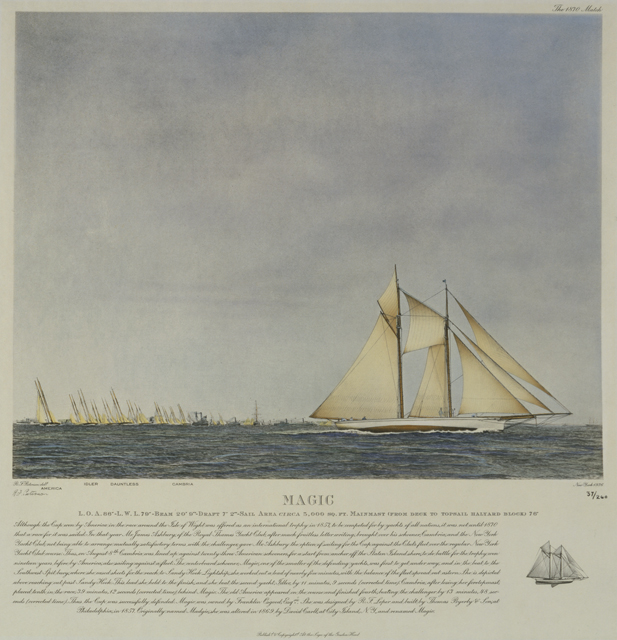 1936.0894.000001_1
 P0025-09 - 08
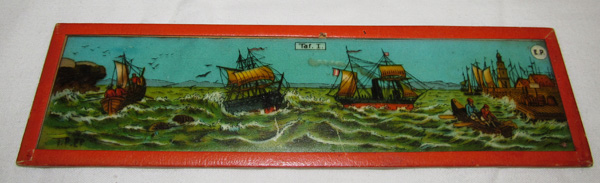 93-09-01
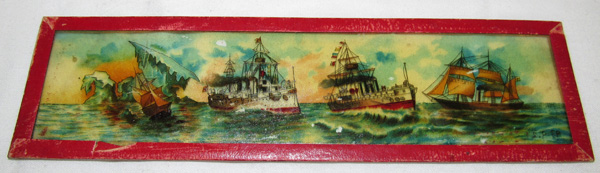 93-09-02
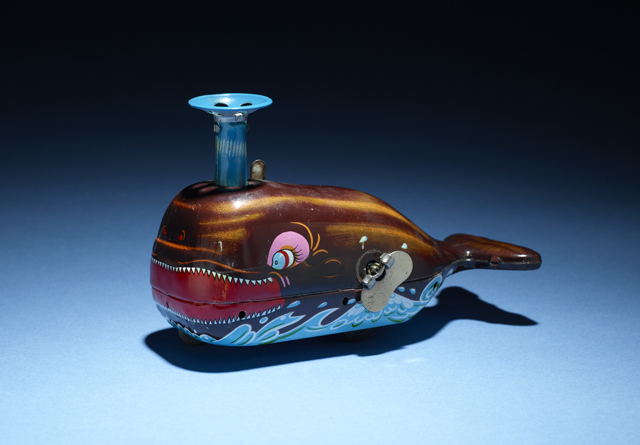 1964.0108.000001_1
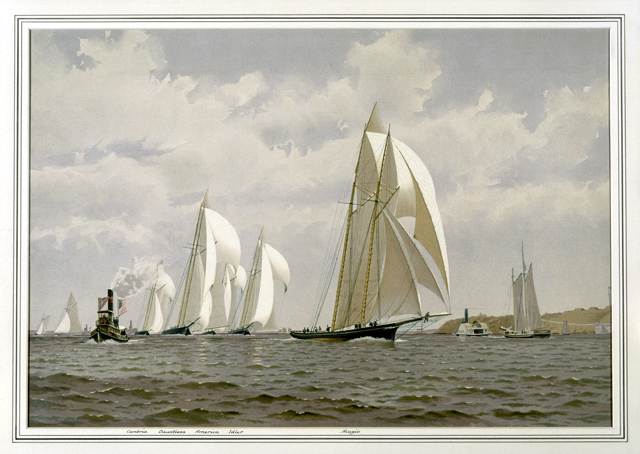 1934.1228.000001
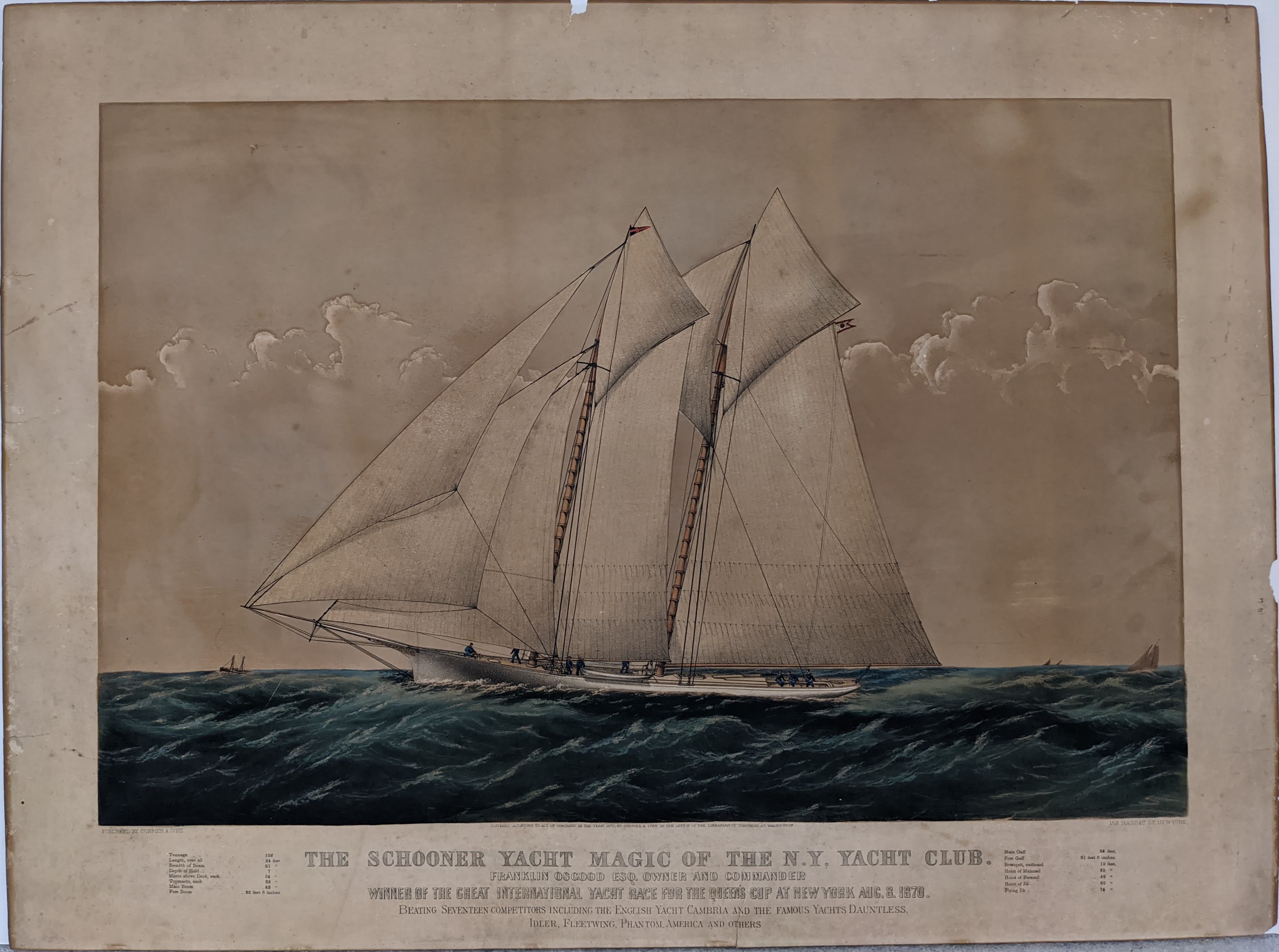 LP1674
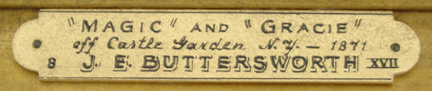 Full-size image
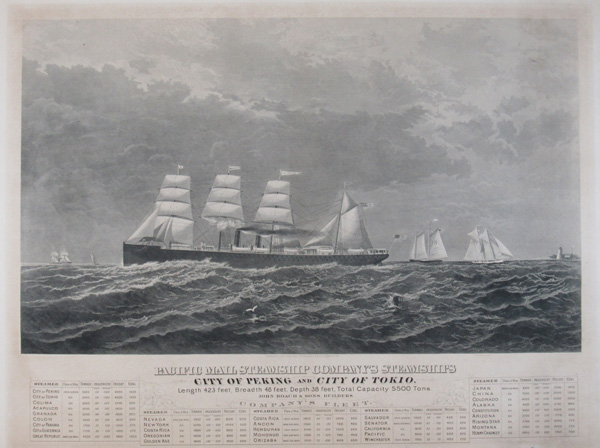 le200
 P0003-01 - J-101
 P0003-01 - J-125
 P0003-01 - L-5539
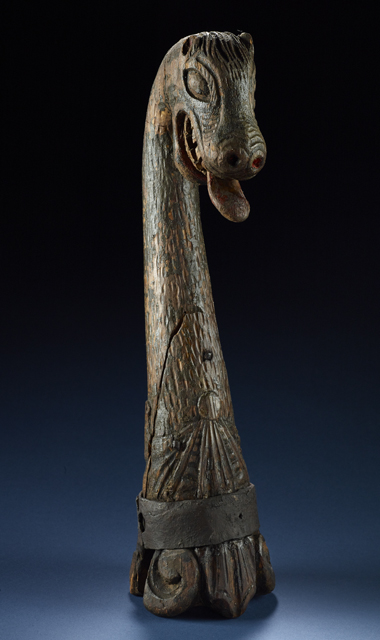 1937.0491.000001_1
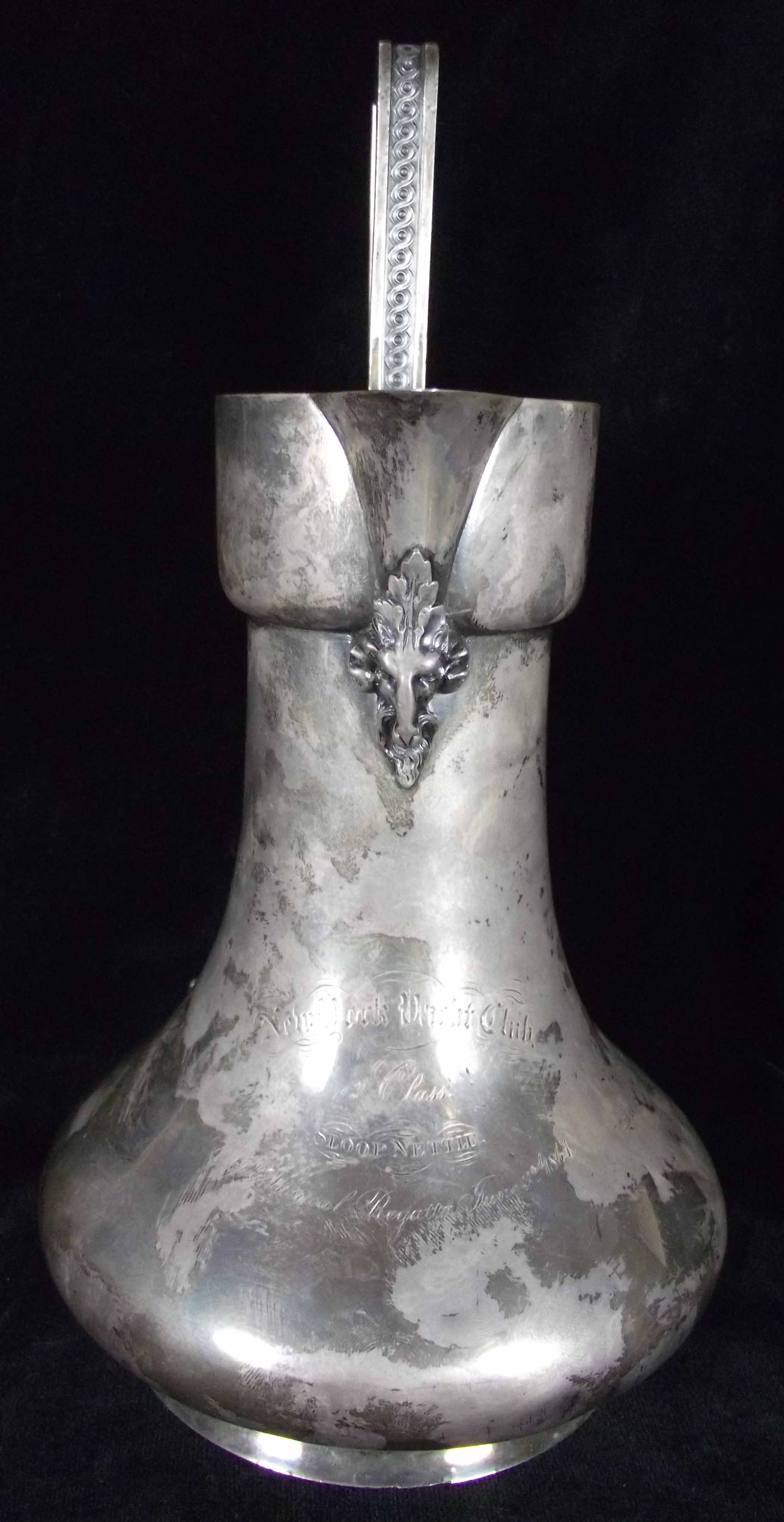 Full-size image
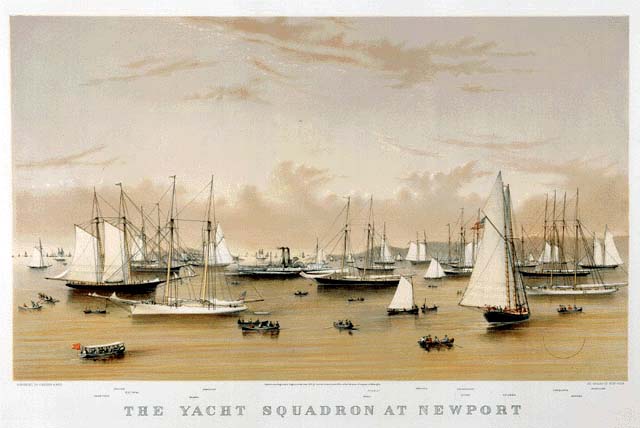 Full-size image
 Full-size image
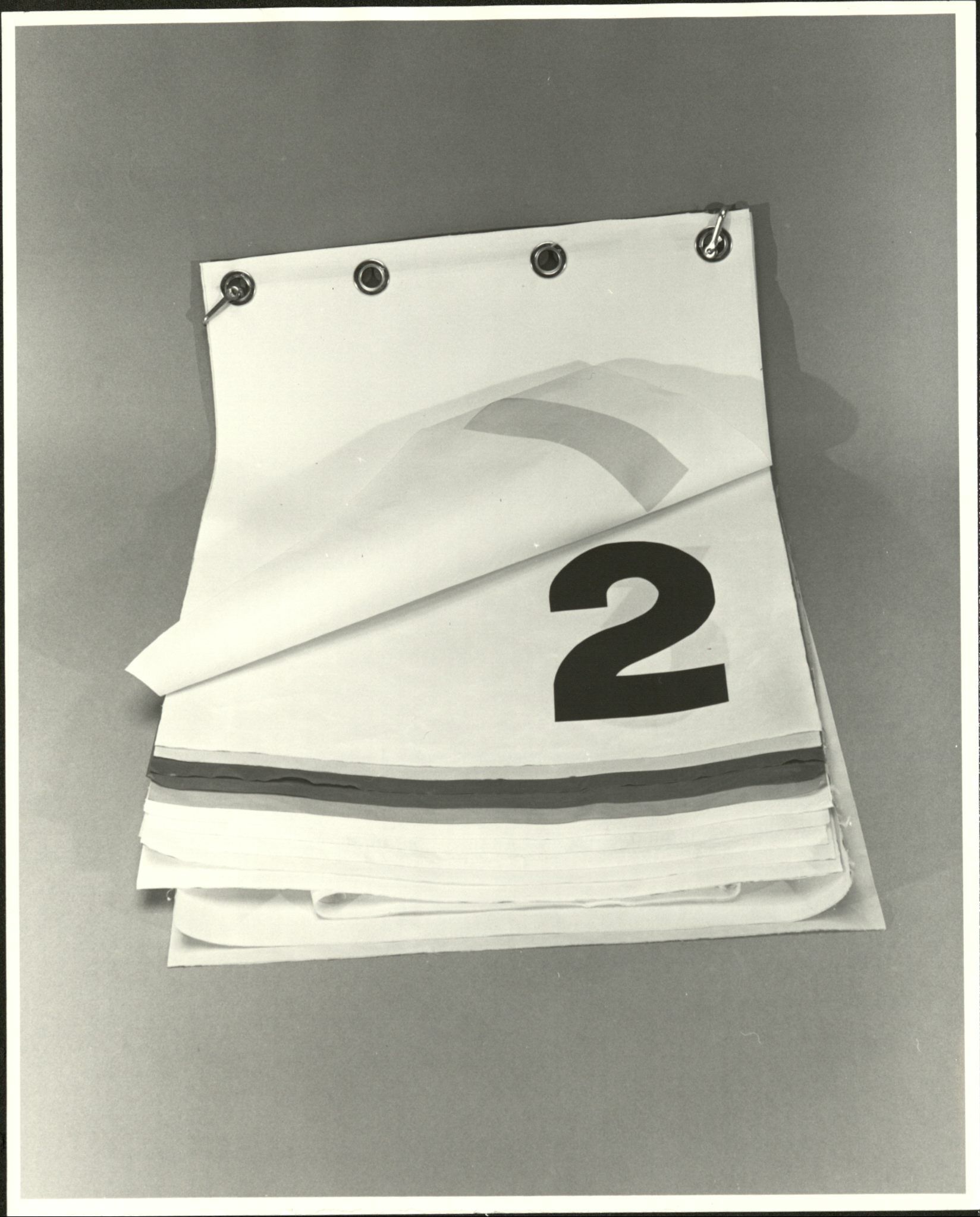 83-53
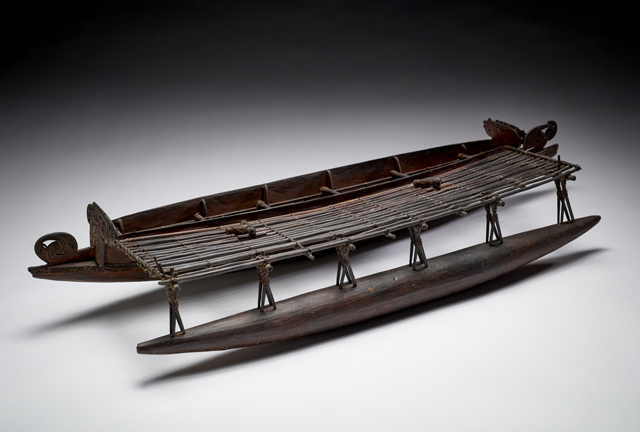 1936.0091.000005_1
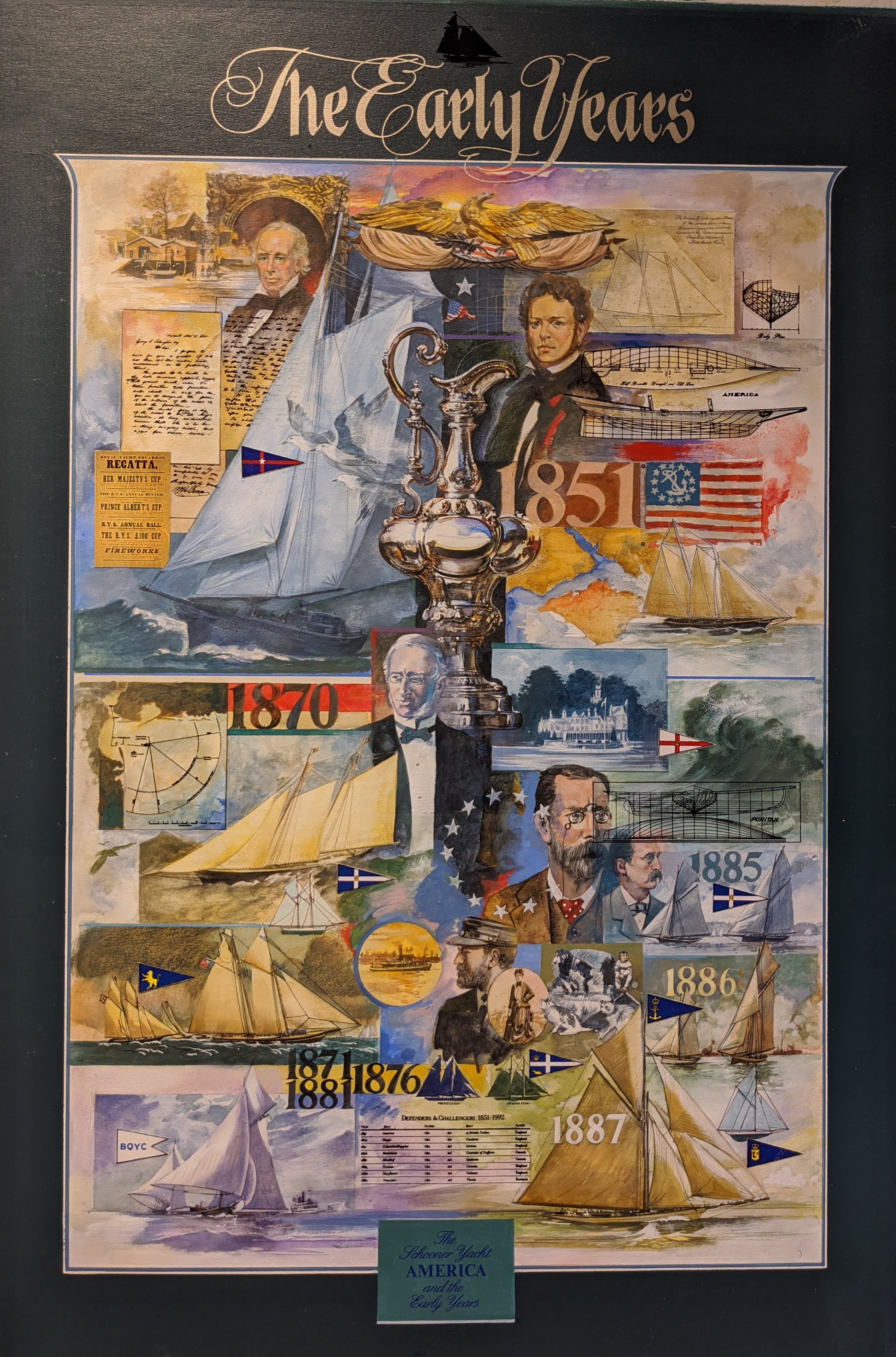 2020.0010.000001a
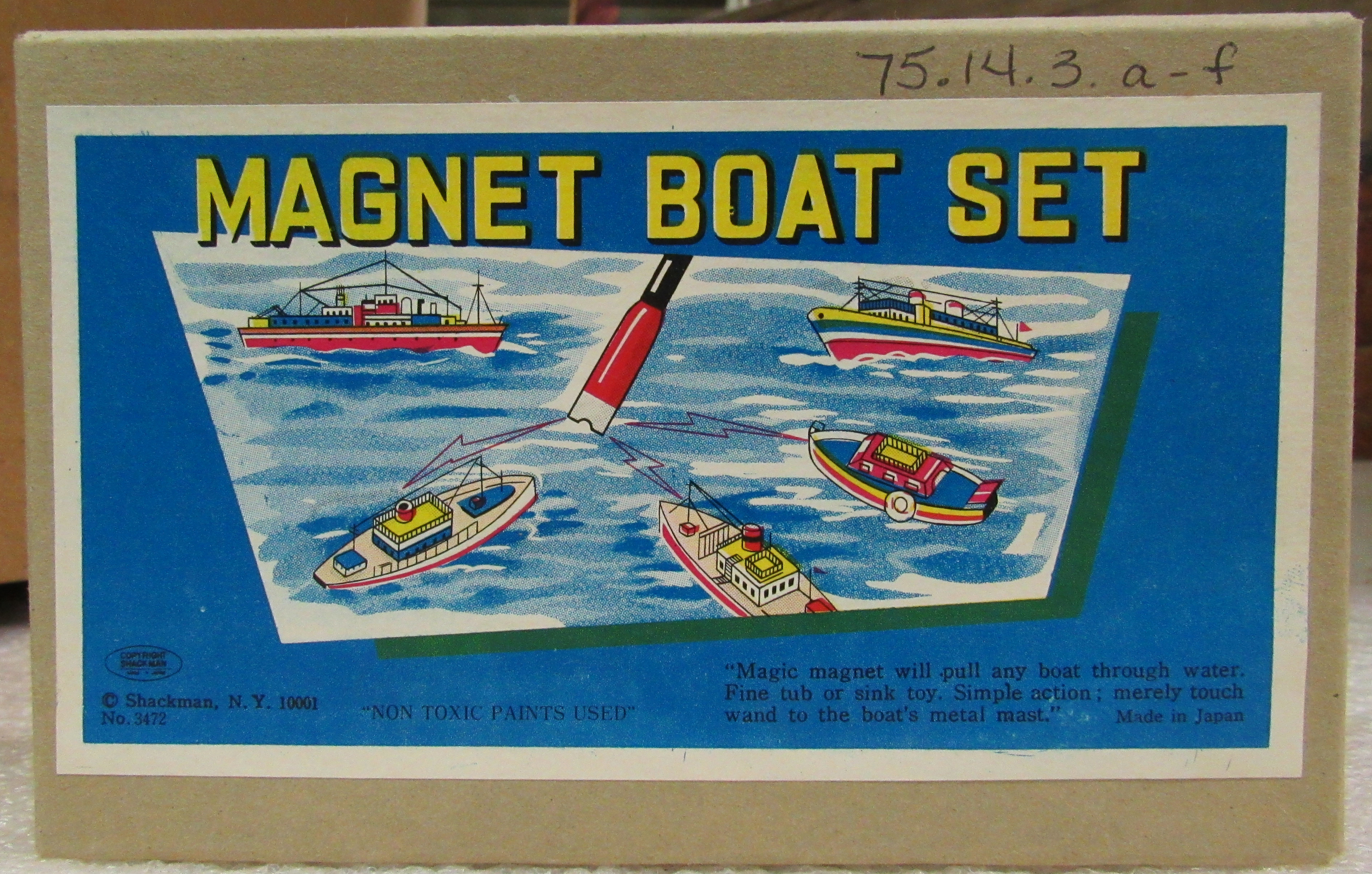 75-14-03
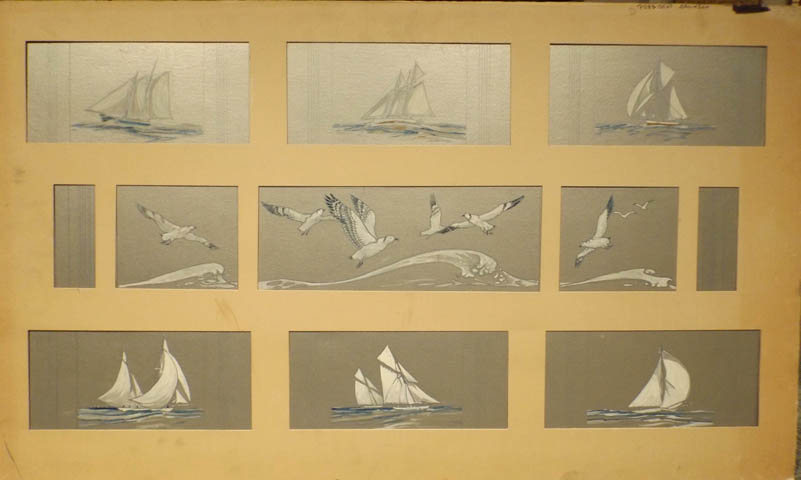 qw1032-02
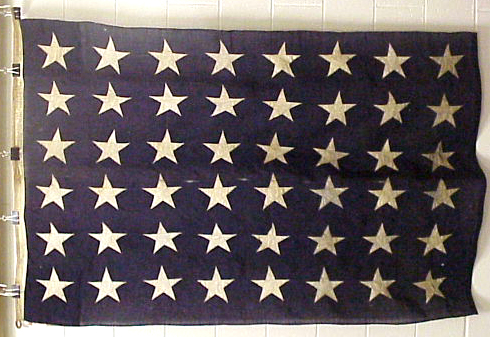 Full-size image
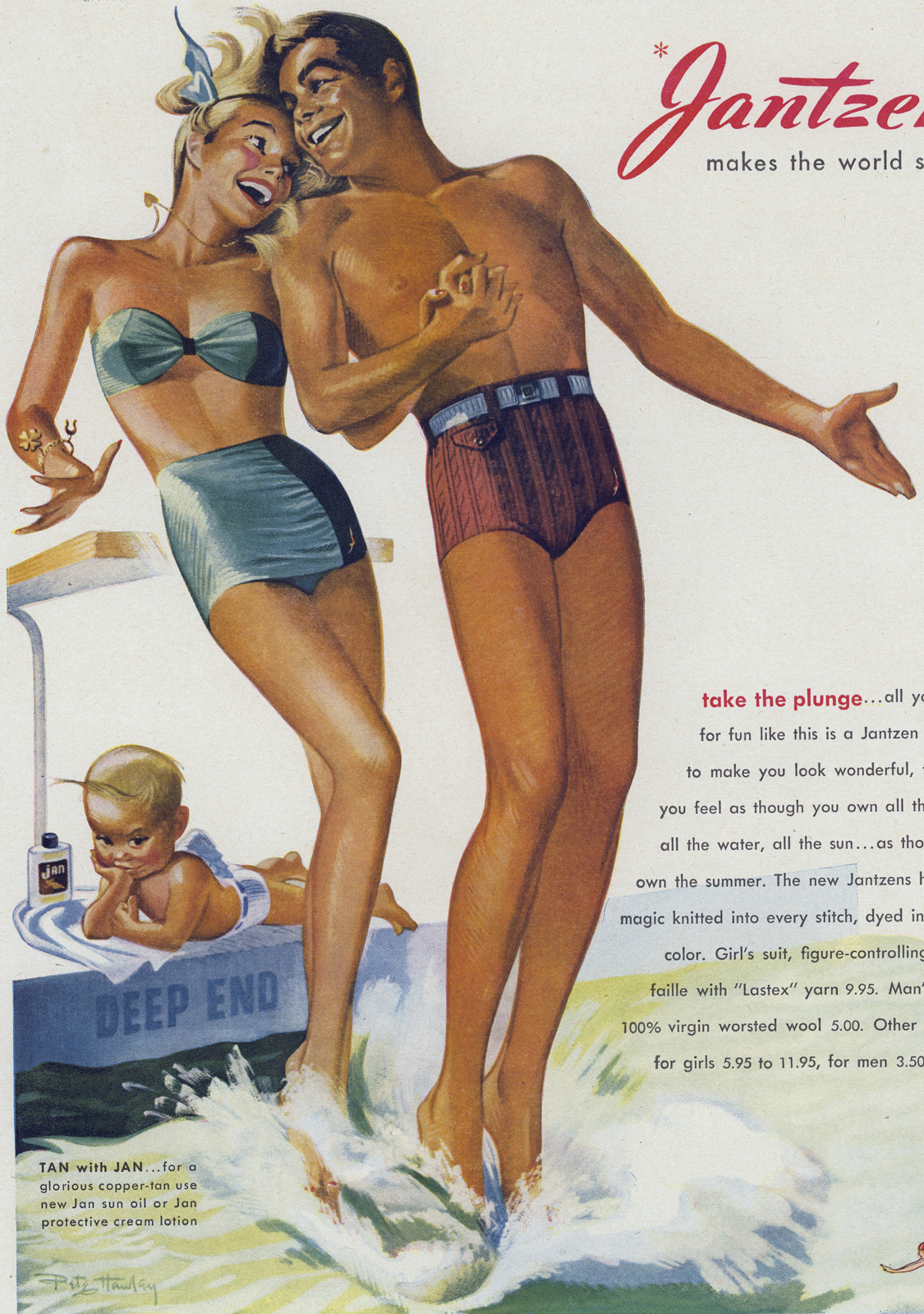 2001.0006.000002_2
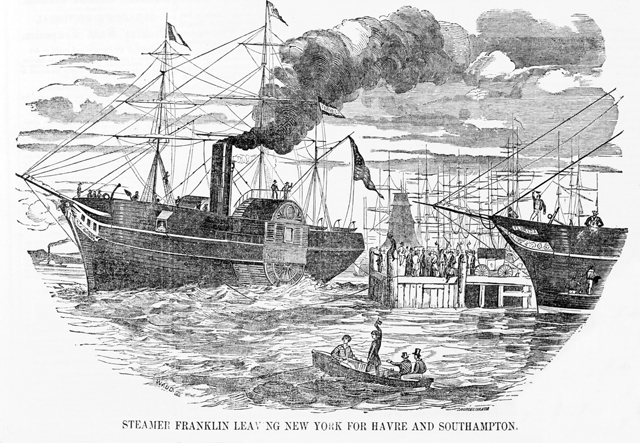 1970.0311.000001
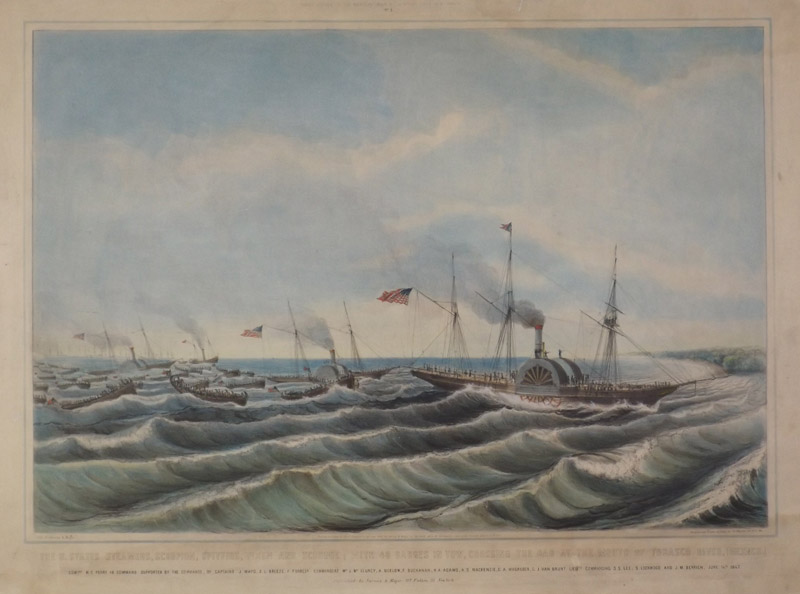 lp508
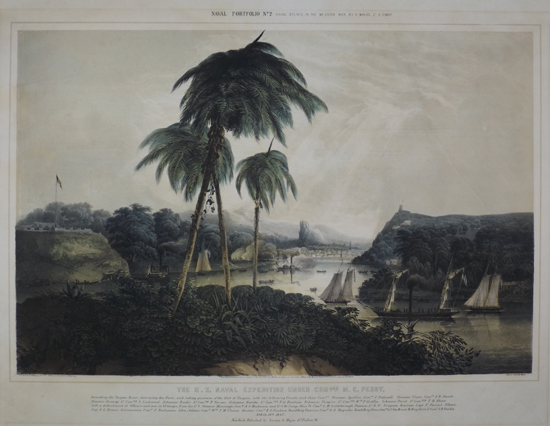 lp3752
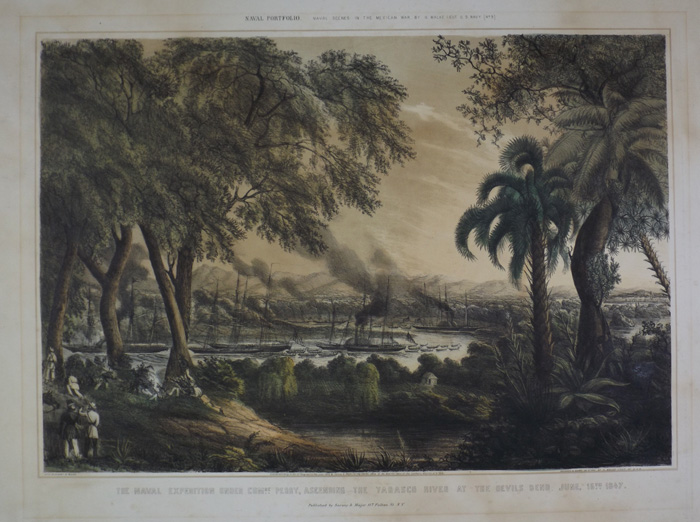 lp3754
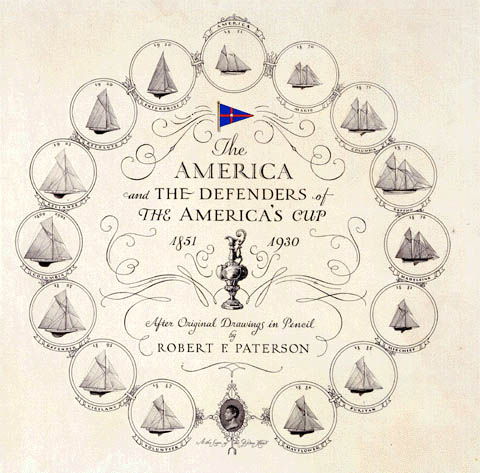 Full-size image
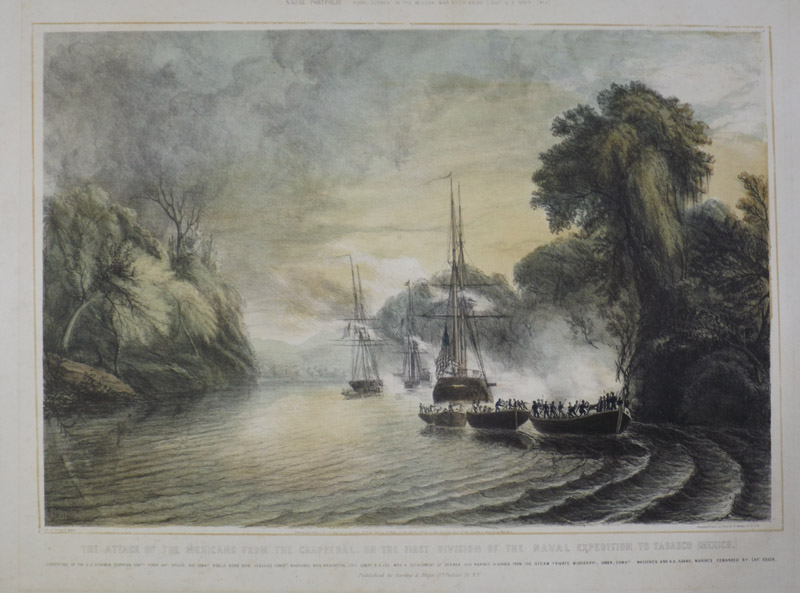 lp3753
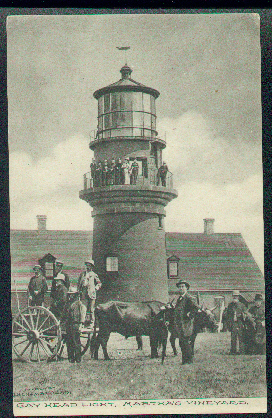 Full-size image
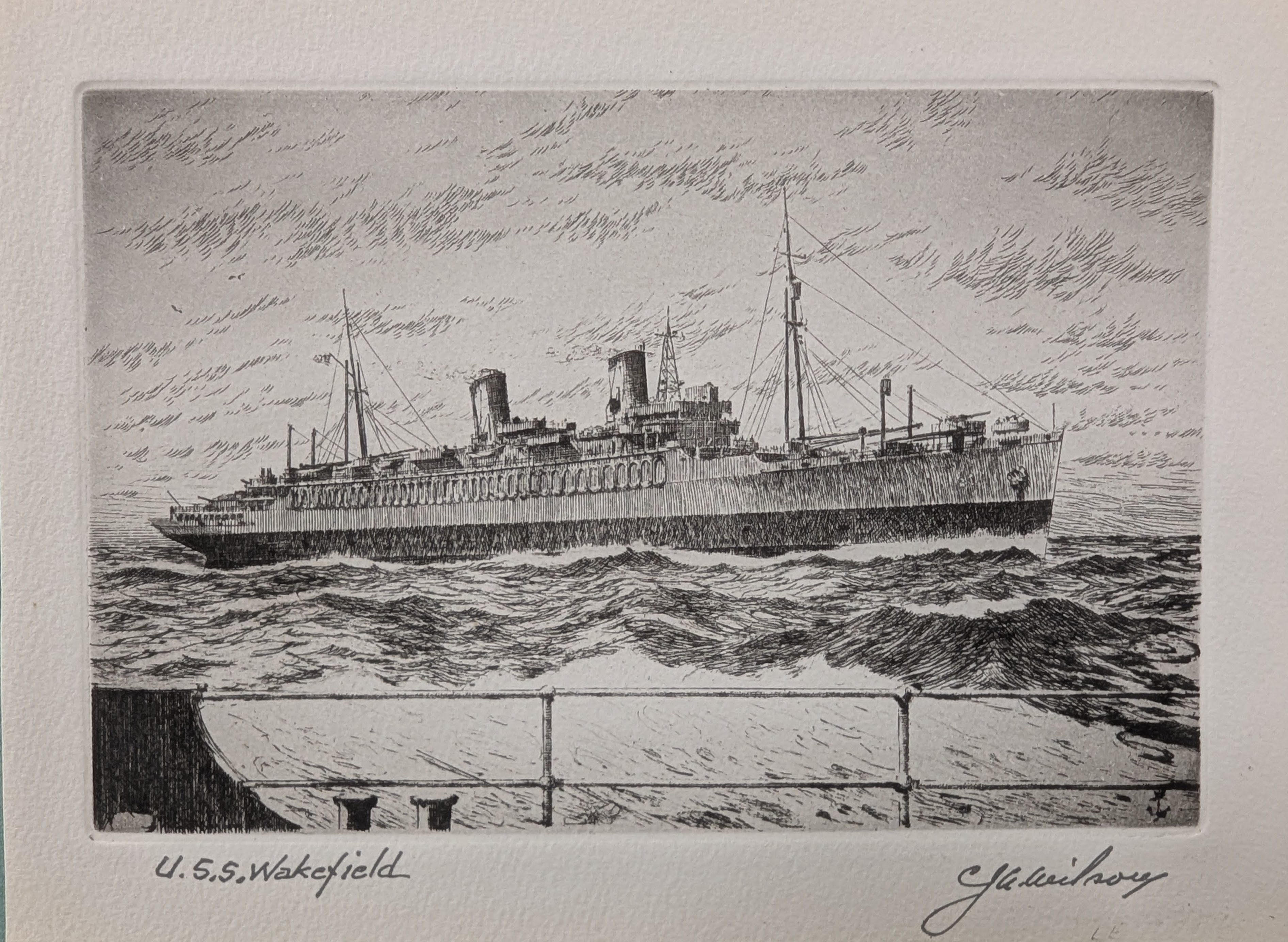 le3396_1
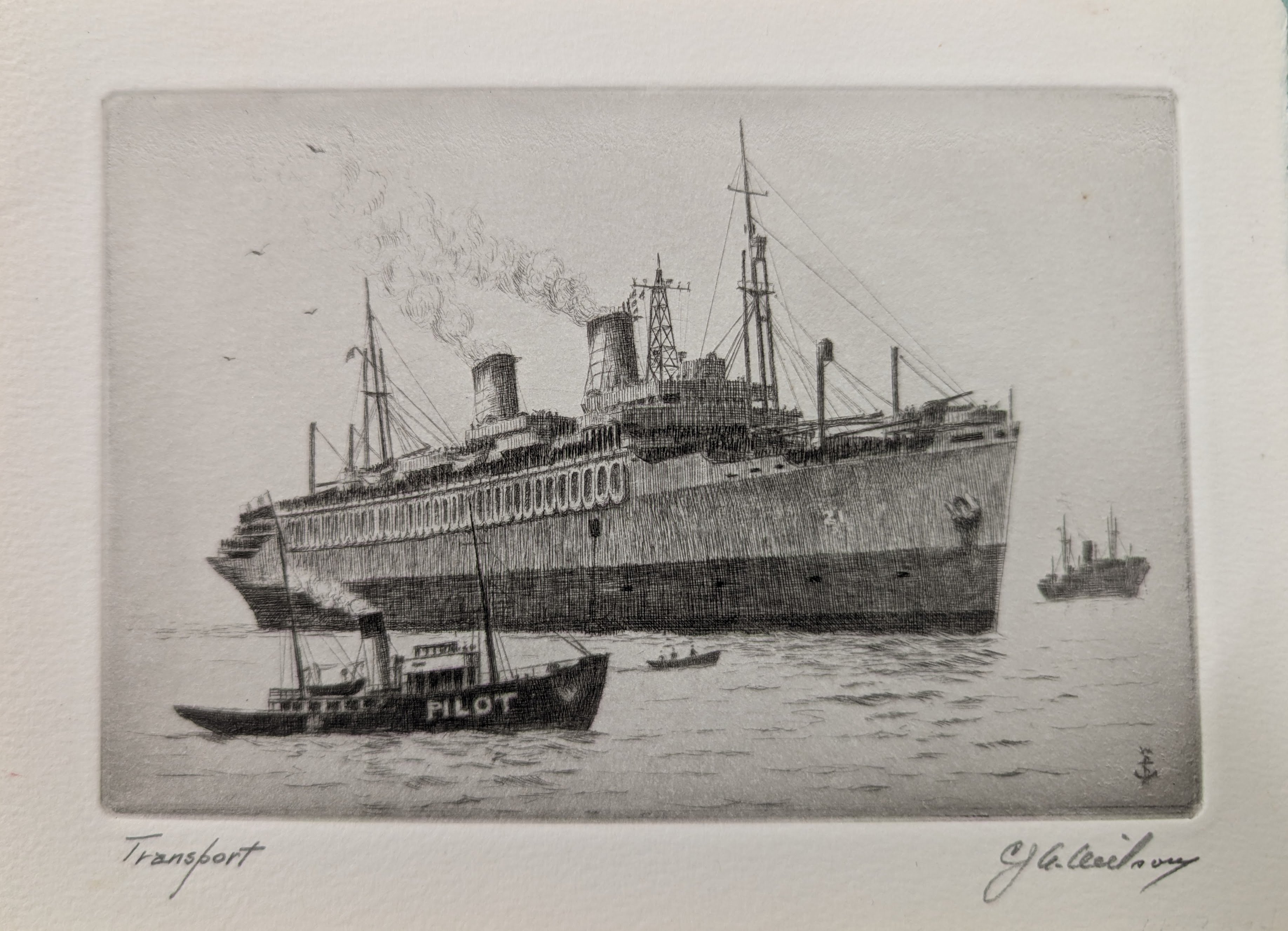 le3394_1
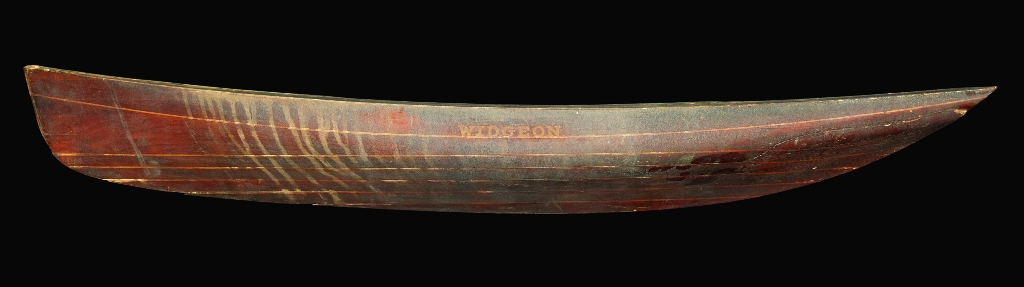 2020.0014.000013_1[1]
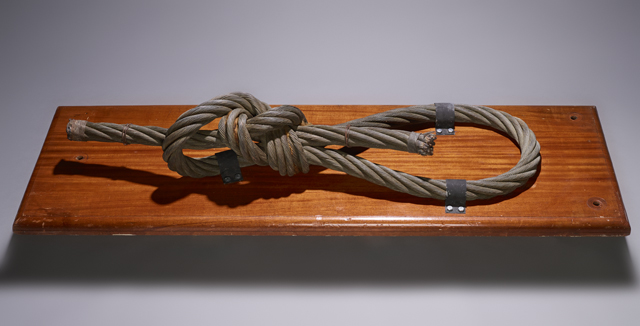 1950.0079.000001
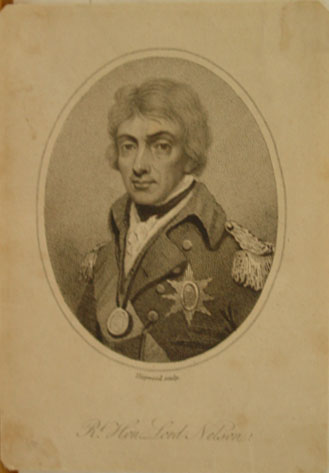 Full-size image